Catalogs A & E · Special Feature
Kamanin, Twice Told
A twenty-five-year-old pilot’s memoir, and the same man’s fuller life, written thirty-seven years later
Nikolai Kamanin wrote his first memoir in 1934, at twenty-five, fresh off the ice of the Chukchi Sea and one of the first seven men named Hero of the Soviet Union. He wrote his second in 1972, at sixty-three, a retired colonel-general who had spent the intervening decades commanding aviation in war and then, in a role his young self could not have imagined, choosing and training the Soviet Union’s first cosmonauts. Both books are in this collection, along with a small, personal artifact from the years between them: an illustrated envelope Kamanin signed and dated by hand in 1973. Read together, they are less a pair of biographies than one man revisiting his own youth from the far side of a career he could not yet see coming.
A Hero at Twenty-Five, 1935
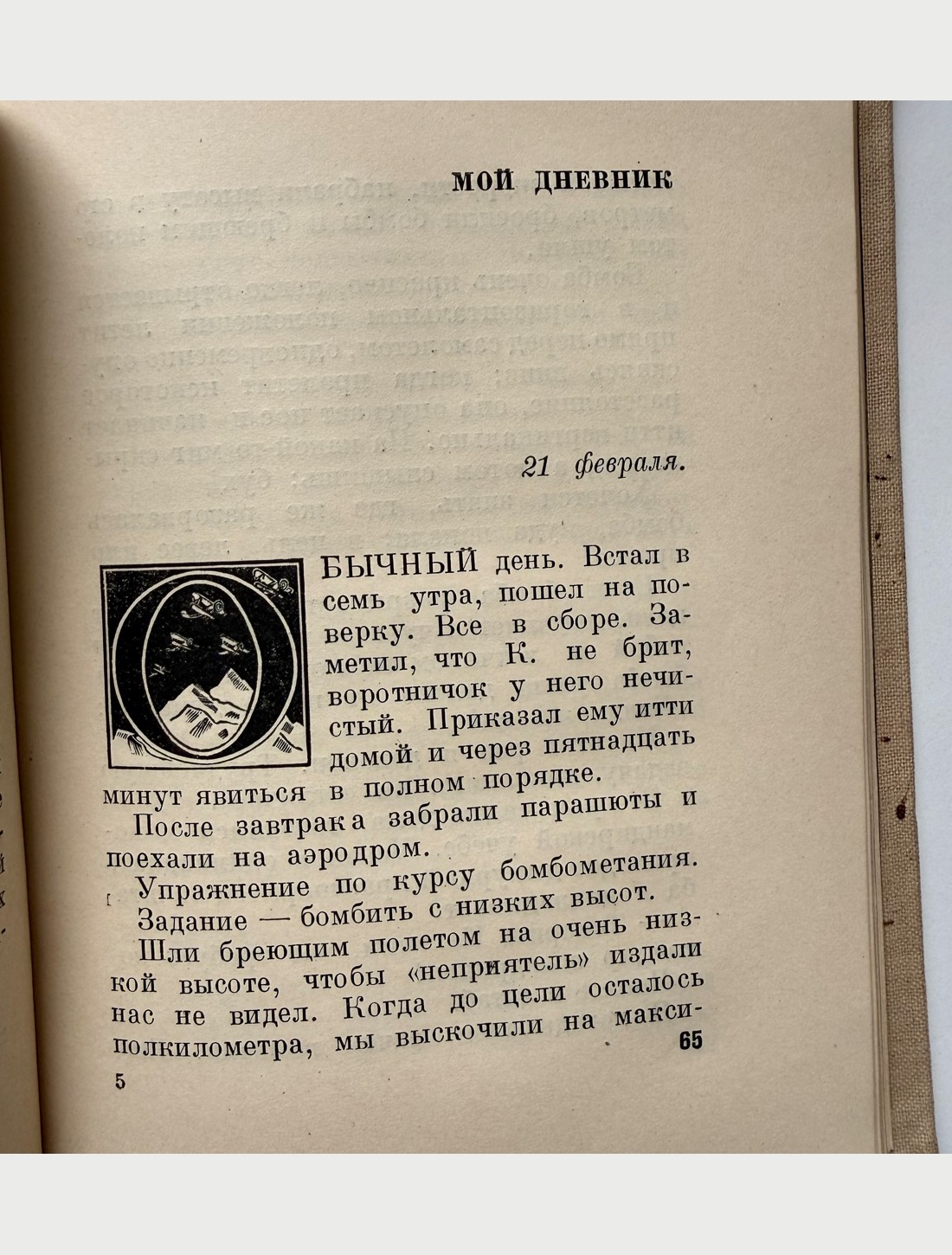
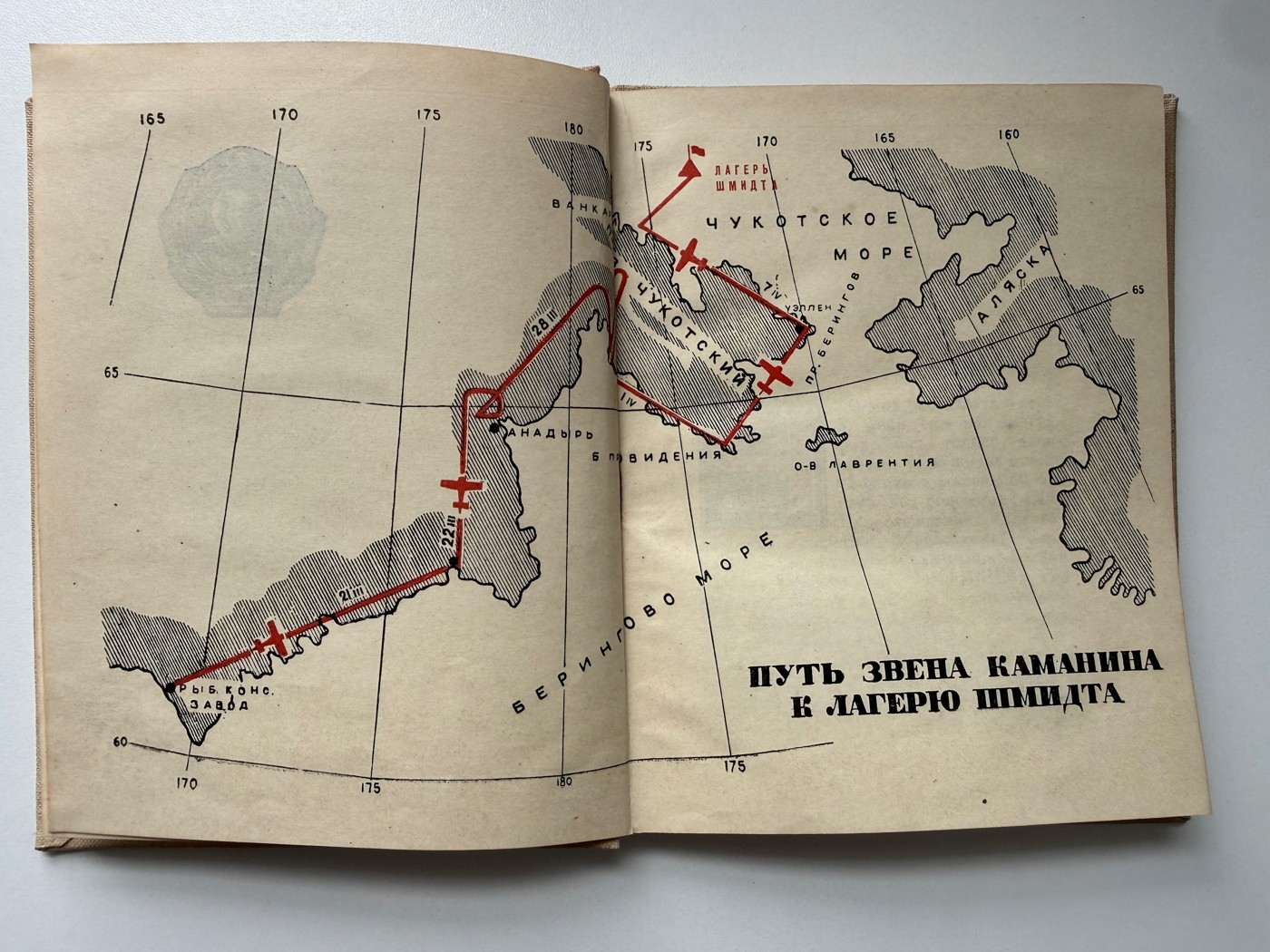
Kamanin’s My Biography Is Only Beginning was written and published within a year of the event that made him famous: the 1934 rescue of the crew of the steamship Chelyuskin, crushed by pack ice in the Chukchi Sea. Kamanin led the first flight detachment to reach the survivors’ camp, and the book that resulted has the compressed, breathless quality of a young man’s account written while the ice was, so to speak, still under his boots. This copy includes a fold-out map tracing his detachment’s route north to Camp Schmidt, and a chapter titled simply “My Diary,” presenting his own field notes — terse, dated entries on flight training, discipline, and the routines of a Far East air squadron — in his own first-person voice.
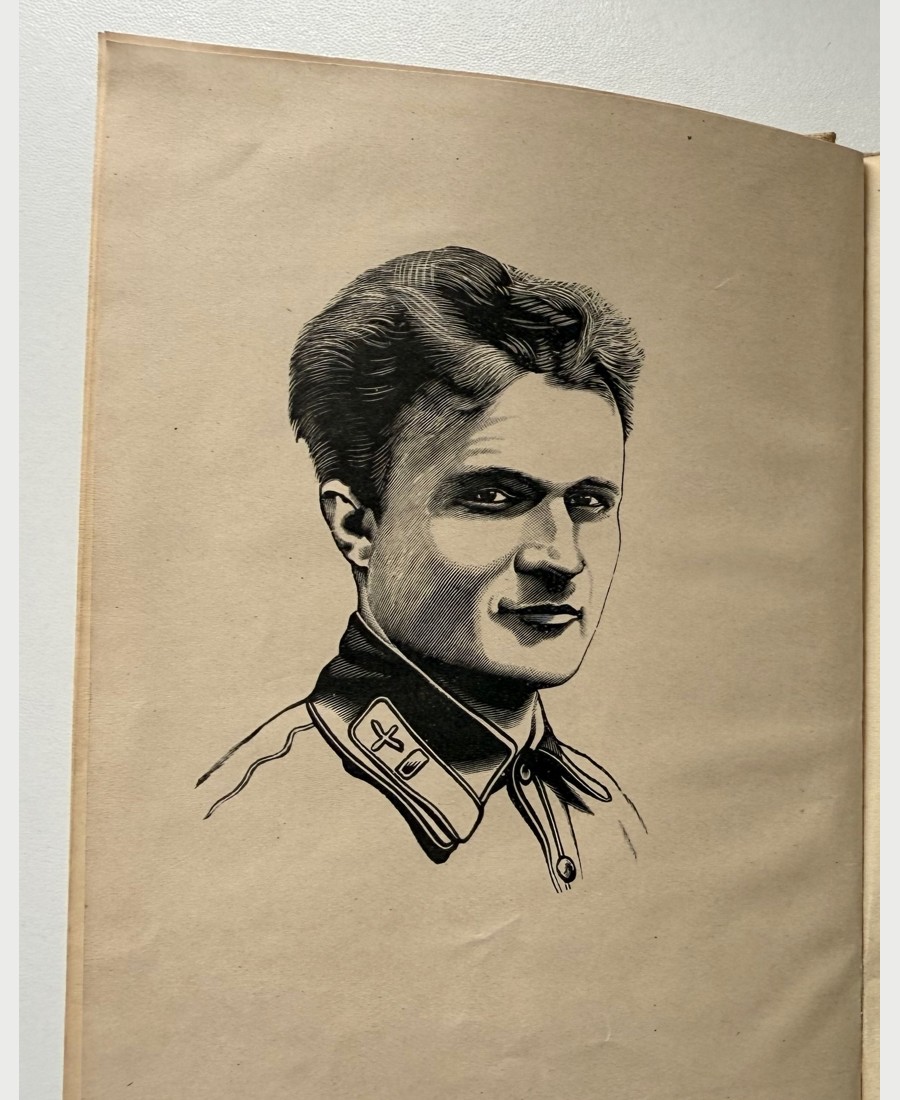
The volume also carries a second, shorter work bound in behind it: G. Kish’s “Kamanin and Amakasu,” a fictionalized account pitting Kamanin against an invented Japanese officer, written in the anti-Japanese, anti-fascist register typical of mid-1930s Soviet Far East publishing. It runs from roughly page 111 to the end of the book, a distinct work by a different author rather than part of Kamanin’s own account.
The Same Rescue, Retold
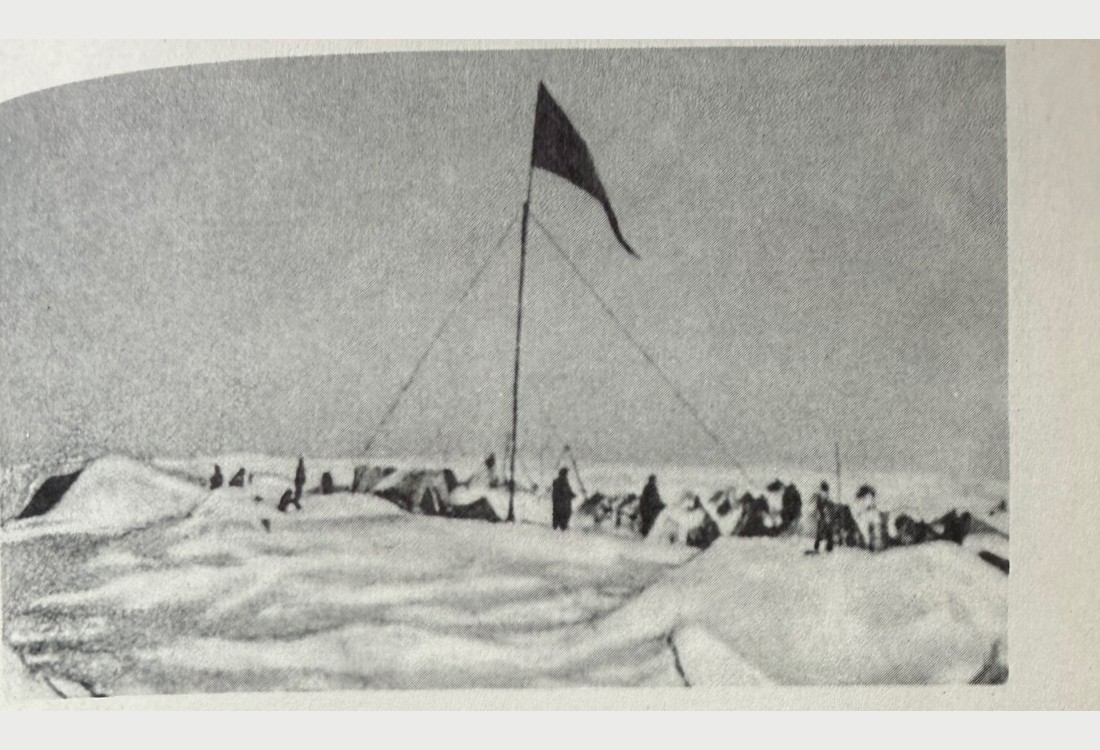
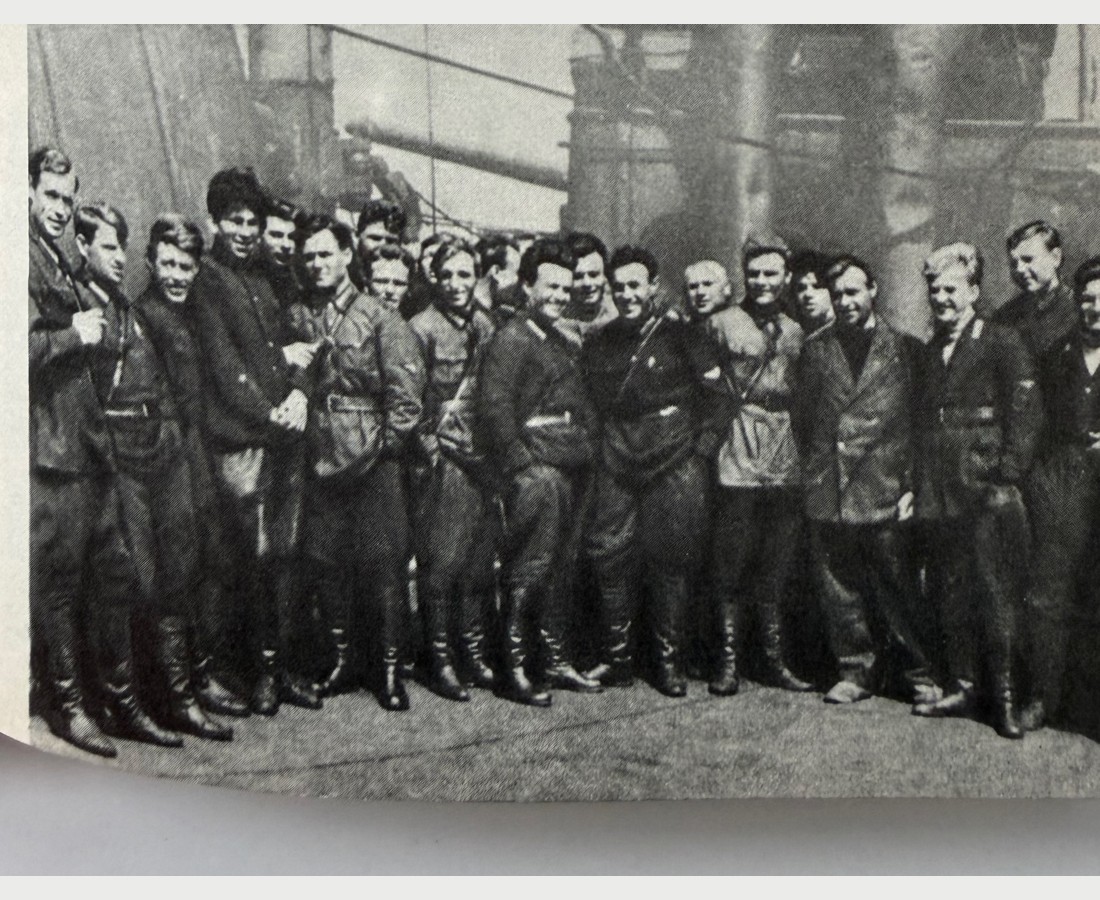
The Chelyuskin rescue is the hinge both books turn on, but the two accounts give it very different weight. In the 1935 book it is the subject of a single chapter, told in the urgent present tense of someone who has just lived it. In the 1972 memoir, Pilots and Cosmonauts, the same episode is the subject of an entire part — roughly fifty pages, titled “The Rescue of the Chelyuskin Crew” — illustrated with photographs Kamanin could only have gathered and captioned decades after the fact: the ice camp itself, flag raised over the tents, and the airmen of his detachment posing together en route, aboard the steamer Smolensk.
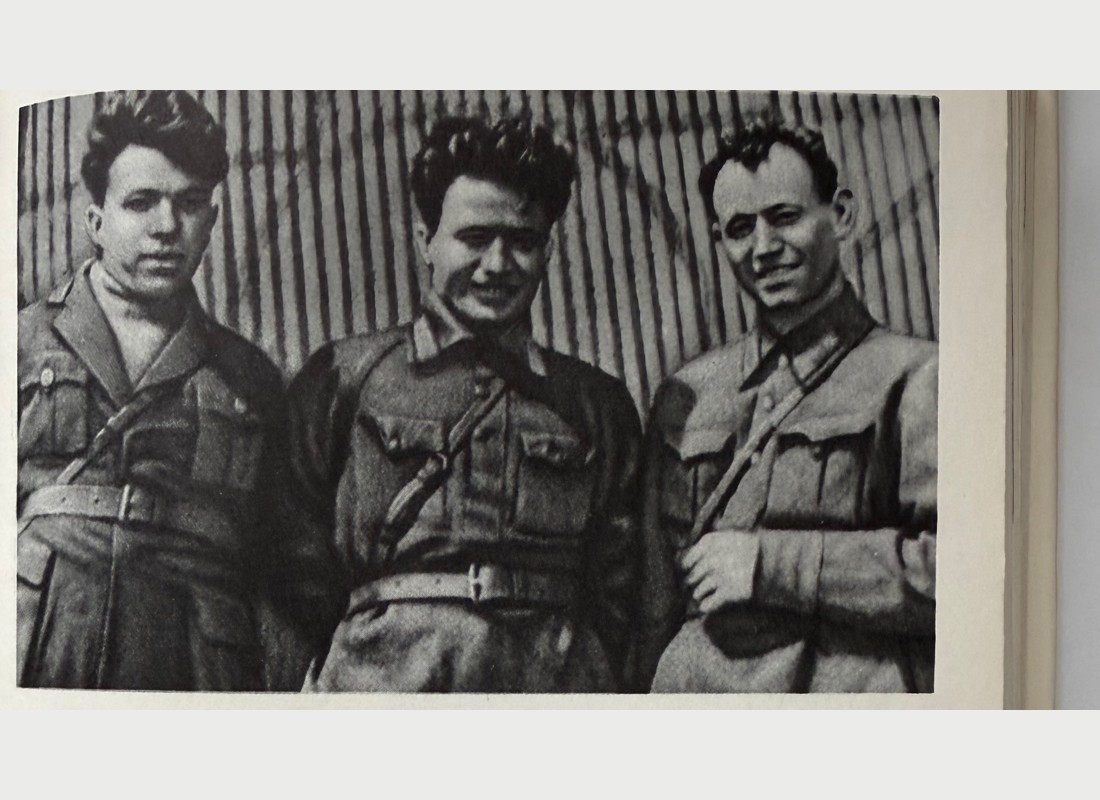
The 1972 book leans just as heavily on Kamanin’s own younger voice as the 1935 one did. One photograph of his three-man crew is captioned as a direct quotation from his own account: “My crew. At right, navigator M. P. Shelyganov; at left, K. S. Anisimov” — the same first-person, diary-keeping habit that produced the 1935 book’s field notes, now folded into a memoir written from much further away.
Into the Space Age
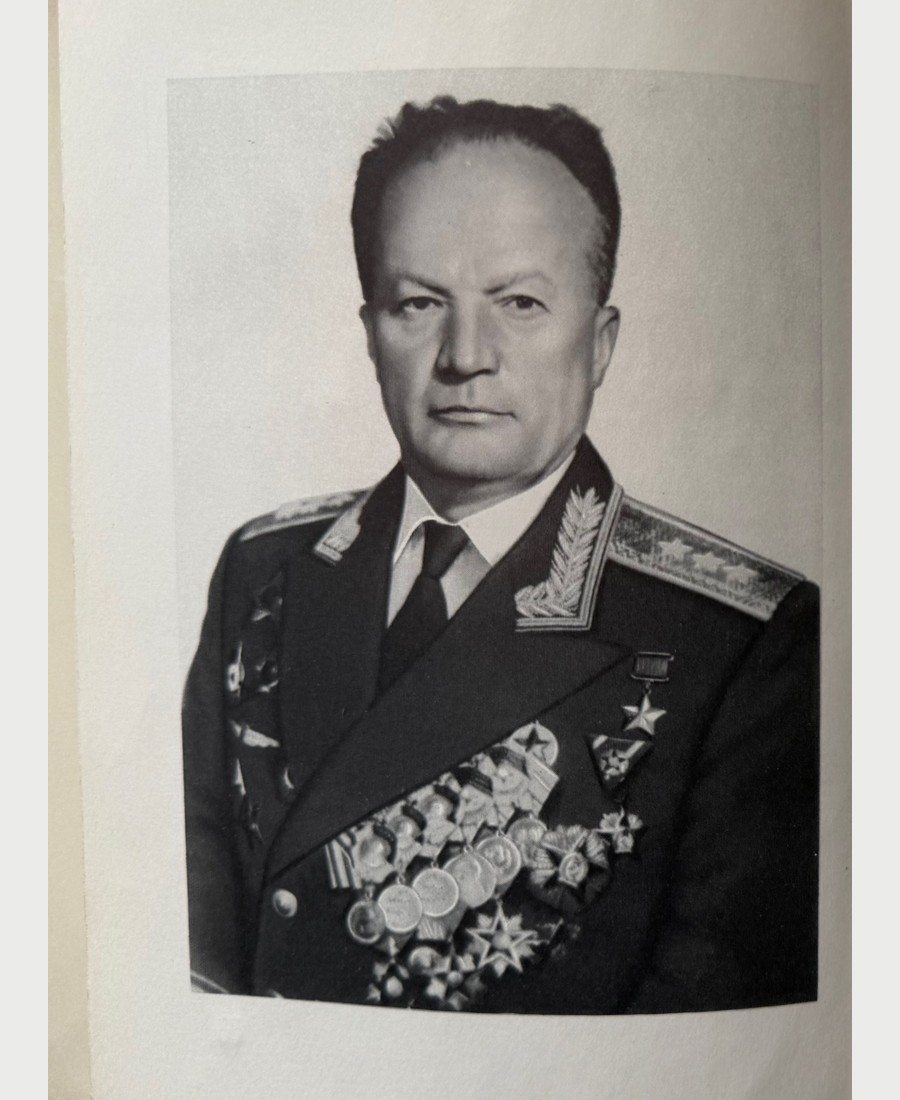
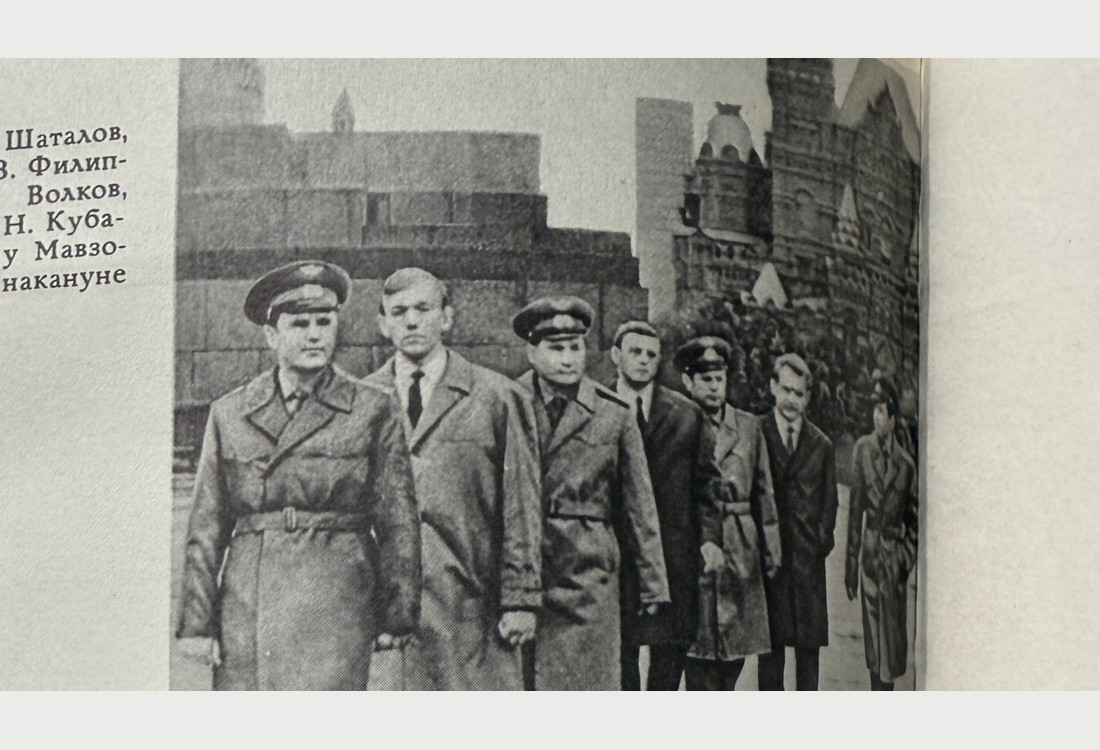
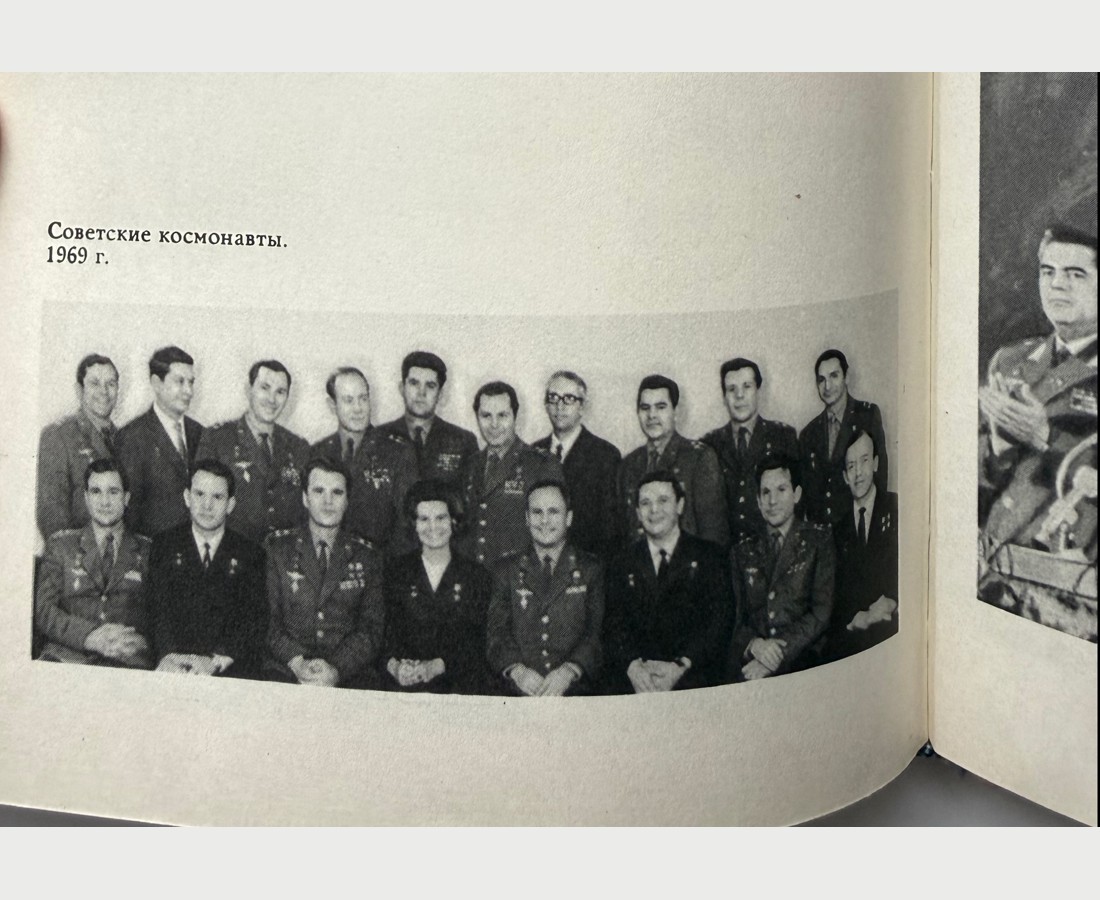
Pilots and Cosmonauts covers the whole arc of Kamanin’s career in four parts — flight training and the prewar air force, the Chelyuskin rescue, wartime command, and finally his work from the early 1960s leading cosmonaut selection and training. That last role is the one referenced, still unnamed, in the note on his 1935 book elsewhere in this collection: at twenty-five he could not have known that the ice-rescue fame he was writing about would eventually put him in charge of choosing the men who flew to space. By 1972 the book’s photographs have shifted entirely from parkas and biplanes to greatcoats and rockets — cosmonauts filing past the Lenin Mausoleum before a launch, and the wider cosmonaut corps posing together, decorated, urbane, a world away from the young pilots of 1934.
A Signed Envelope, 1973
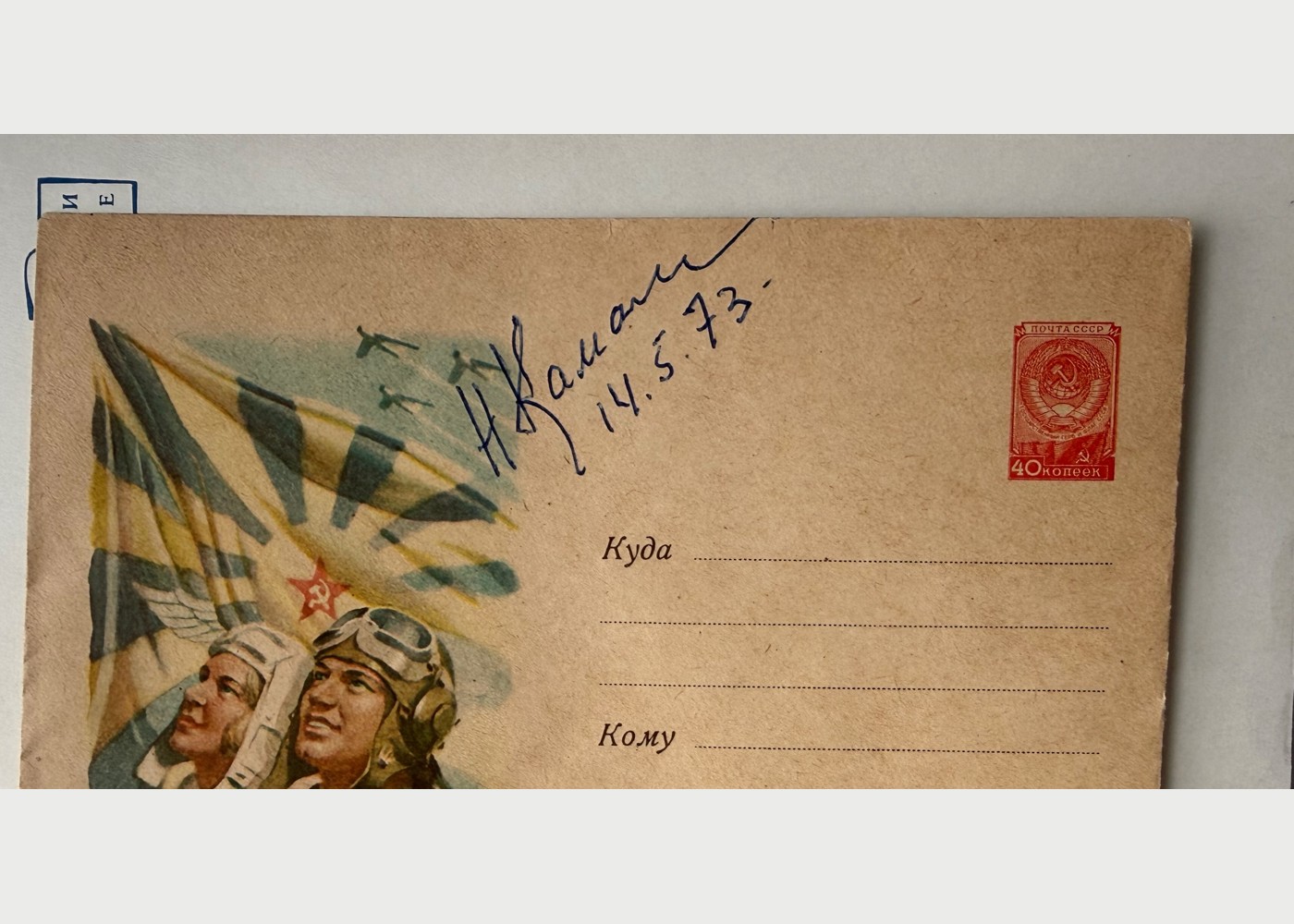
Laid into the 1972 book is a small, later addition: an illustrated envelope marking the “Day of the Air Fleet of the USSR,” unused and unaddressed. The envelope itself was printed years earlier — a Ministry of Communications imprint on the back dates the stock to July 1959 — but Kamanin signed and dated it well after the fact, in ink, directly across the illustration: “N. Kamanin, 14.5.73.” It is a modest object next to the two memoirs, but a fitting one: a Soviet Air Fleet keepsake, signed by a man who spent his whole working life in that fleet, from a young flight-detachment commander to the general who sent its newest branch into orbit.
Bibliographic Notes
My Biography Is Only Beginning (“Моя биография только начинается”) was published by Molodaya Gvardiya, Moscow, in 1935, with a print run of 100,000 copies; the colophon records Glavlit clearance no. Б-1799 and names “Iskra Revolyutsii” as the printer. Pilots and Cosmonauts (“Летчики и космонавты”) followed in 1972 from Politizdat, Moscow, in the publisher’s “About Life and About Oneself” series, a 448-page first edition with a print run of 200,000 copies, printed by Krasny Proletary. Both are hardcover with dust jacket; the earlier volume also contains G. Kish’s “Kamanin and Amakasu” as a second, separately authored work bound in behind Kamanin’s own text.