- Year
- 1962–1963
- By
- NASA Flight Research Center / NASA Headquarters
- Section
- Robotic & Experimental Programs
- Shelf
- Box 1
- Catalog
- Catalog F · NASA Missions
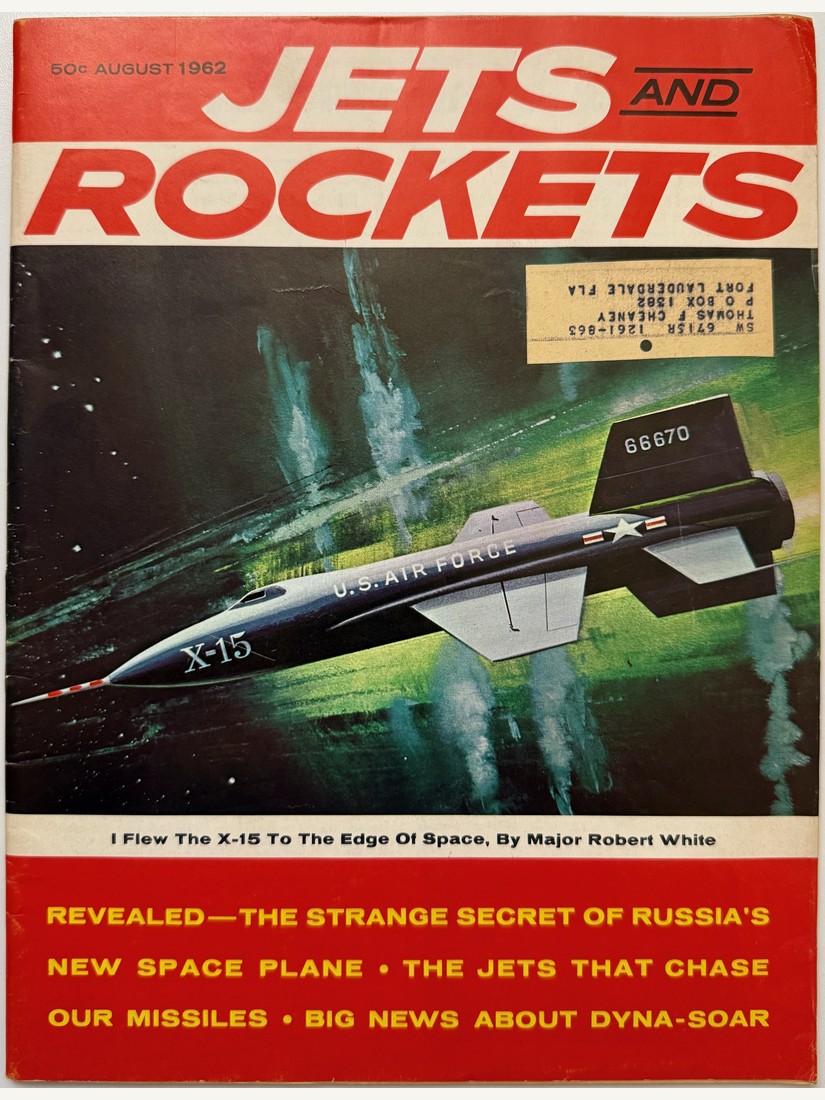
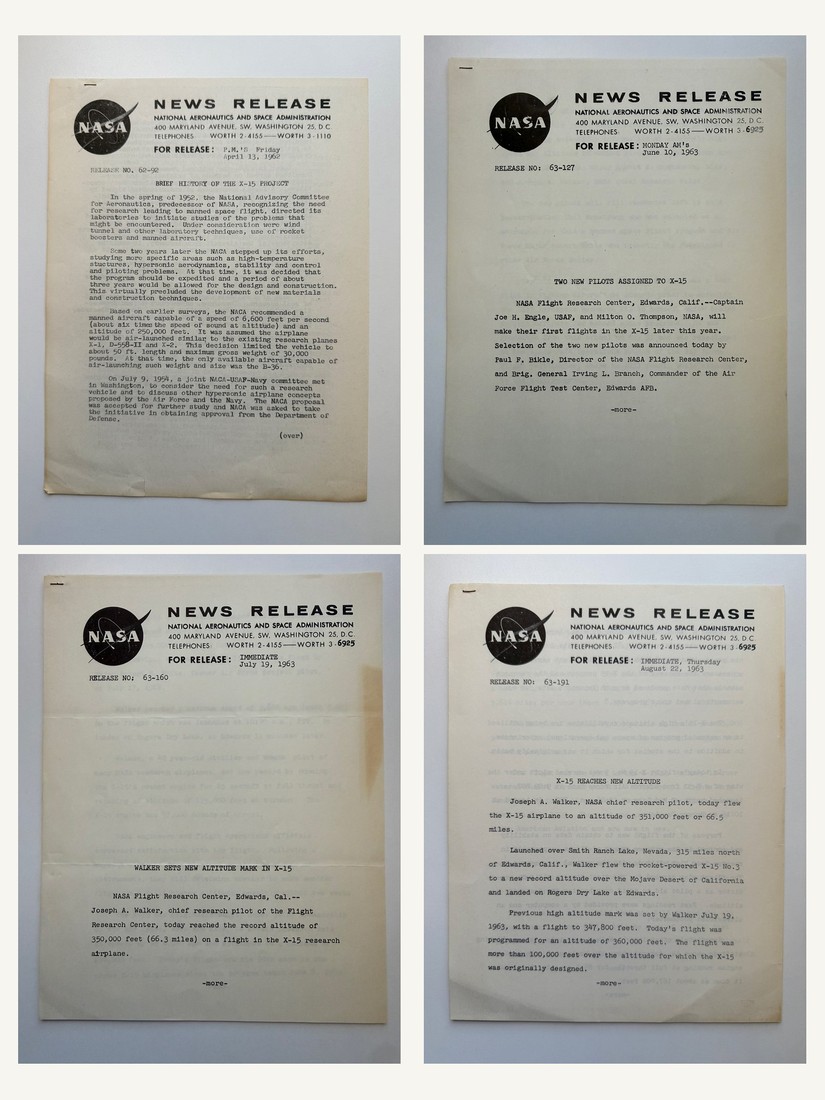
Four original press releases charting the X-15 rocket-plane program over its most active year. Release 62-92 (April 13, 1962), “Brief History of the X-15 Project,” traces the program’s origin to a spring-1952 NACA directive on manned-spaceflight problems, the resulting design requirement for an air-launched aircraft capable of Mach 6 and 250,000 feet within a roughly 50-foot, 30,000-pound airframe, and the July 9, 1954 joint NACA-Air Force-Navy committee that approved the concept for development.
Release 63-127 (June 10, 1963) announces two new project pilots, Capt. Joe H. Engle (USAF) and Milton O. Thompson (NASA), per Flight Research Center director Paul F. Bikle and Air Force Flight Test Center commander Brig. Gen. Irving L. Branch.
The final two releases record chief research pilot Joseph A. Walker’s back-to-back altitude records: 63-160 (July 19, 1963) reports his flight to 350,000 feet (66.3 miles), and 63-191 (August 22, 1963) reports his follow-up flight in X-15 No. 3, launched over Smith Ranch Lake, Nevada and landed on Rogers Dry Lake, reaching 351,000 feet (66.5 miles) — more than 100,000 feet above the altitude for which the aircraft was originally designed, and explicitly framed in the release as surpassing his own July mark.
Engle would go on to fly the X-15 above 50 miles, earning astronaut wings, before commanding two Space Shuttle missions.