- Year
- 1967
- By
- R. M. Machell, ed. / NASA
- Section
- Gemini
- Shelf
- R7
- Catalog
- Catalog F · NASA Missions
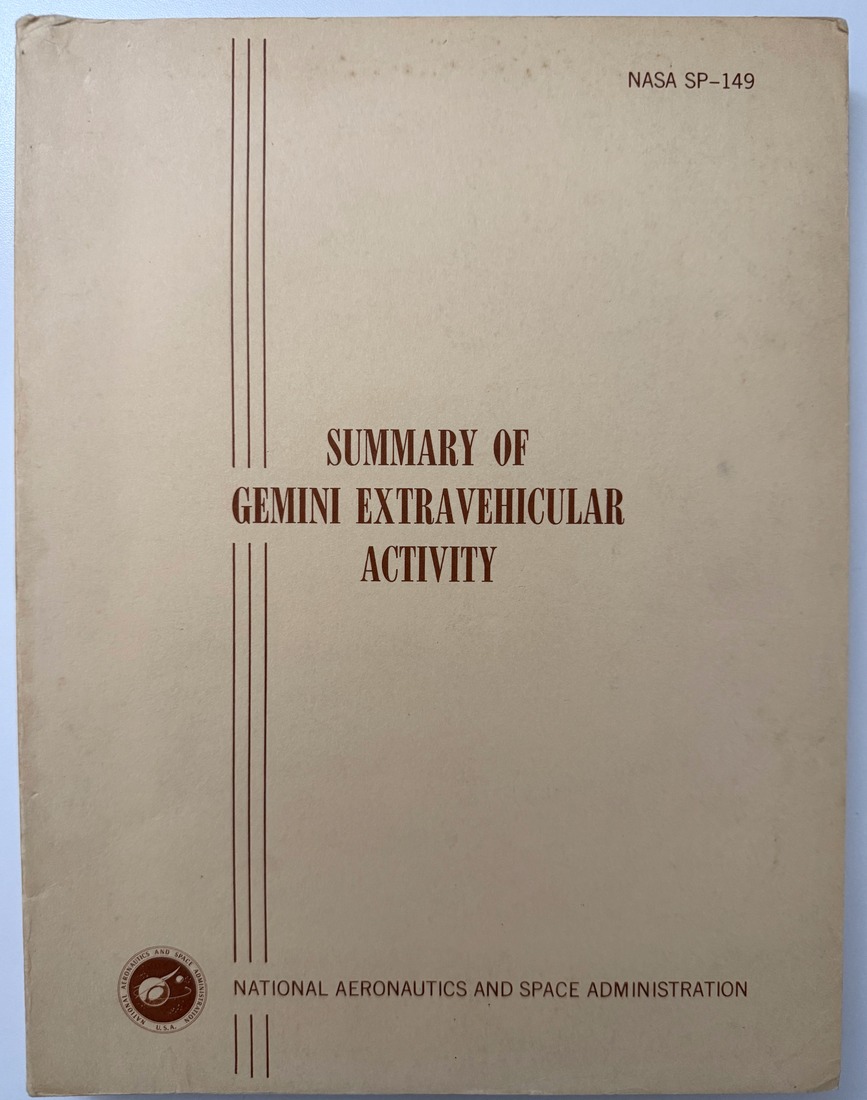
NASA SP-149, published by the Office of Technology Utilization’s Scientific and Technical Information Division.
Edited by Reginald M. Machell of the Manned Spacecraft Center, Houston, it works mission by mission through the six Gemini EVAs (IV, VIII, IX-A, X, XI, and XII), then treats the life support hardware built for them: the pressure suits developed for each flight, the Ventilation Control Module system, the chestpack-mounted Extravehicular Life Support System, and the backpack-mounted Extravehicular Support Package, along with the umbilical and tether combinations that connected astronauts to the spacecraft (a 25-foot umbilical, 30- and 50-foot assemblies, a 75-foot electrical tether for Gemini VIII, and a 125-foot tether for the Astronaut Maneuvering Unit).
A closing section on body positioning and restraints covers the handholds, handrails, waist tethers, and Velcro- and pip-pin-mounted attachment devices developed and refined mission to mission.
The concluding section notes that ease of completing EVA tasks correlated with how they were sequenced, that pilots who first completed a standup EVA were more at ease during the umbilical EVA that followed, that equipment lanyards curbed the loss of untethered gear on the final two missions, and that underwater zero-g simulation using the actual flight hardware did the most to catch human-engineering problems with foot restraints and handholds before flight.