Catalog C · Postwar · Special Feature · Book of Note
Ballistics of the Future. Three Editions.
Kooy & Uytenbogaart — the V-1 and V-2
In 1946 two Dutch engineers — Ir. Dr. J.M.J. Kooy and Prof. Dr. Ir. J.W.H. Uytenbogaart — published the first serious open technical study of the V-1 and V-2. Four years later a Soviet defense-industry press issued an abridged Russian translation under the scientific editorship of the rocket dynamicist A.A. Kosmodemyansky. This collection holds three copies of the work: two examples of the 1946 edition and the 1950 Soviet translation. Set side by side, they show the same technical content re-manufactured and re-authorized for different audiences and each copy carries the marks of a different mid-century reader who used it.
The Three Copies
Two 1946 states plus one 1950 translation. The violet edge marks the Soviet copy.
| Stam issue1946 · Haarlem | McGraw-Hill issue1946 · New York / London | Soviet edition1950 · Oborongiz, Moscow | |
|---|---|---|---|
| Binding | Black cloth; cover lettering in yellow and red | Blue cloth boards; gilt spine, “Kooy and Uytenbogaart” | Publisher’s boards; blue-and-cream printed design |
| Imprint | The Technical Publishing Co. H. Stam, Haarlem | McGraw-Hill Book Company, New York and London | Oborongiz (State Publishing House of the Defense Industry), Moscow |
| Copyright | “Copyright by The Technical Publishing Cy. H. Stam” — English form, undated | “Copyright 1946 by De Technische Uitgeverij H. Stam” — Dutch form, dated | Translation of the 1946 work. |
| Printer | Van de Garde, Zaltbommel (named on leaf facing title) | Printer line omitted; “Printed in England” overstamped “MADE IN HOLLAND” | Tipografiya Oborongiza (Oborongiz press) |
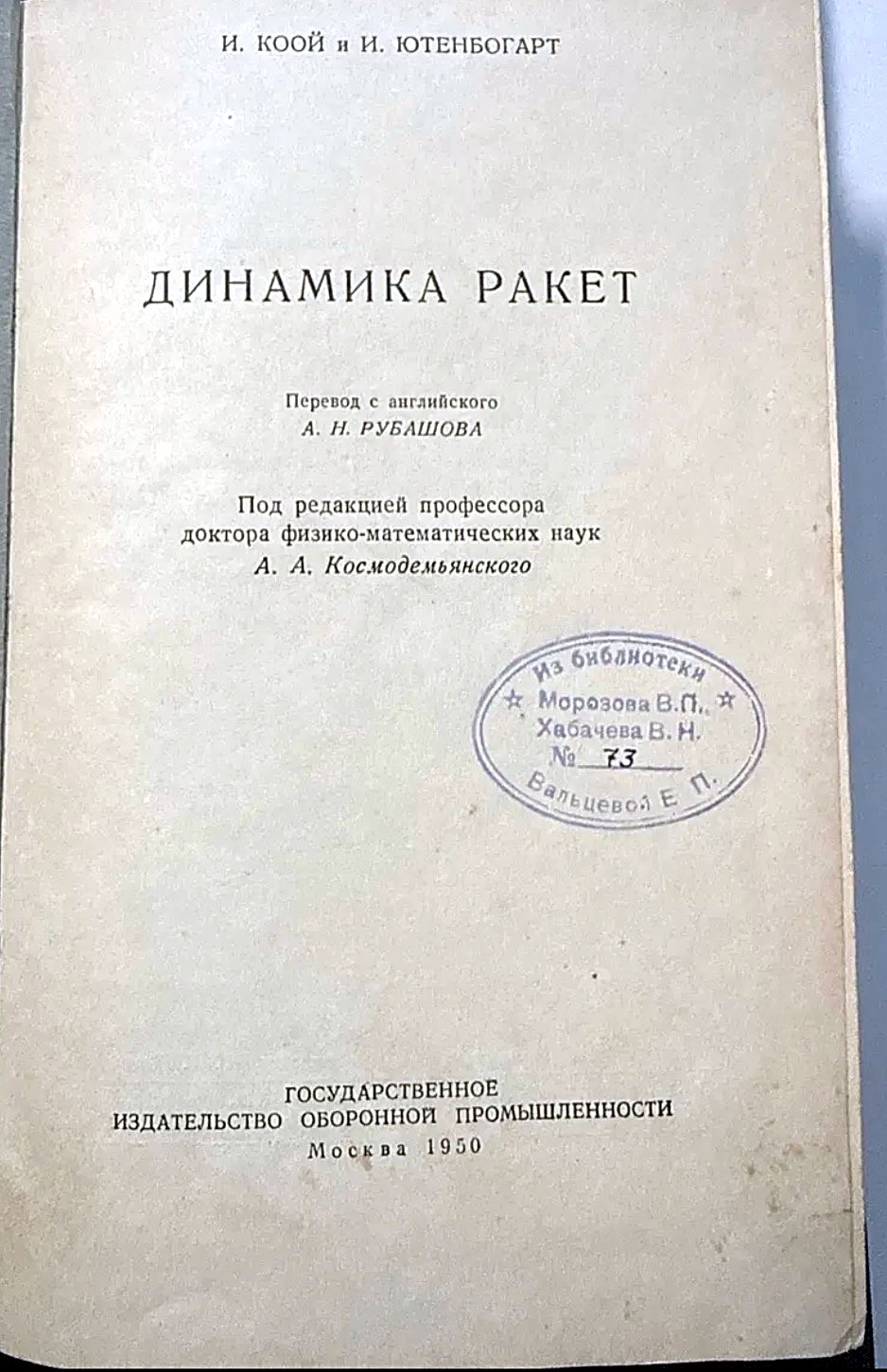
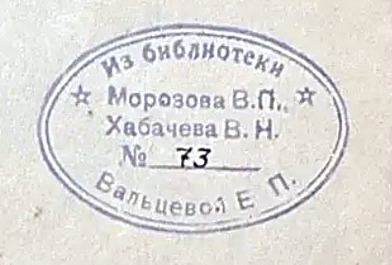
| Distinguishing mark | Clean H. Stam imprint | Hand-stamp origin correction at imprint foot | Purple library stamp: “Iz biblioteki … No. 73” |
| This copy’s annotator | M.J.C. Matthijssen Kluit — inserted dossier of hand-drawn sheets | Mathematical reader — ink corrections to equations and errata | Reader working the A9/A10 passages — blue/red underlining |
The Stam and McGraw-Hill issues are the blue- and black-cloth binding states recorded by Ciancone (#116), with no established priority. Both are printed from the same Dutch sheets; the McGraw-Hill copy simply carries a different imprint and a hand-applied origin correction.
The 1946 Edition: Origins and Imprints
The preface tells the origin story in the authors’ own frame. Kooy, of the Aeronautical School at The Hague, began a theoretical thesis on projectile and rocket dynamics during the war; the occupation and postwar publishing difficulties delayed it. The copyright notice reads identically in both issues, the drawings of the V-weapons “are based on measurements made by the authors” and are held under copyright, confirming the engineering figures as original measured work rather than reproductions of captured German documents. But the two examples are set differently: the Stam copy’s line runs “Copyright by The Technical Publishing Cy. H. Stam, Haarlem-Holland.” The company’s English name, with no year. The McGraw-Hill copy’s line runs “Copyright 1946 by De Technische Uitgeverij H. Stam, Haarlem-Holland.” The Dutch company name, dated 1946. Same rights-holder, two settings: English and undated on the Continental issue, Dutch and dated on the export issue.
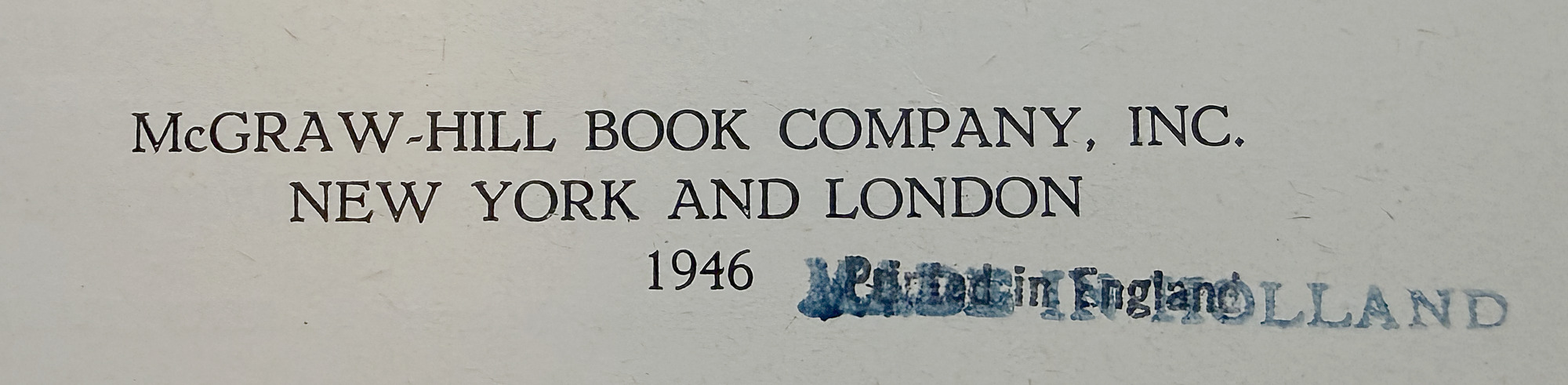
The book was printed in the Netherlands — by N.V. Van de Garde & Co’s Drukkerij at Zaltbommel — published by H. Stam of Haarlem, and co-issued for the New York/London market by McGraw-Hill. Printer, publisher, and co-issuing imprint are three distinct parties: the sheets were manufactured in Holland whatever imprint they carried. The Stam copy names its Dutch printer on the leaf facing the title page and carries the clean H. Stam imprint. The McGraw-Hill copy omits the printer line altogether; in its place, at the foot of the imprint, a printed “Printed in England” line has been over-stamped by hand with “MADE IN HOLLAND” — an origin correction asserting the sheets’ true place of manufacture, with the stamp’s ink offset onto the facing blank page.
The 1950 Soviet Edition: Abridged and Reframed
The Soviet edition is not a straight translation. Kosmodemyansky’s editor’s preface states plainly that the book contains no fundamentally new discoveries and is essentially a summing-up of the technical results of Germany’s long-range bombardment of London. He documents the editorial surgery: the first five chapters of the Dutch edition — vector calculus, analytical mechanics, and numerical integration — were dropped, on the grounds that good Russian-language treatments already existed; the gyroscope and artillery-ballistics chapters were kept because the later rocket chapters depend on them. Because chapters were removed, the chapter numbering was changed. The Dutch transcription of place-names was preserved on the maps to allow cross-referencing with other sources.
The preface also carries an explicit priority polemic. Kosmodemyansky opens by asserting the leading Russian role — Tsiolkovsky, Tsander, Kondratyuk — with footnotes to their 1947 Oborongiz reprints, and charges the authors with bad faith “typical of bourgeois literature” for downplaying Russian priority, citing Tsiolkovsky’s 1913 supplement rather than his foundational 1903 paper and omitting Meshchersky (1897).
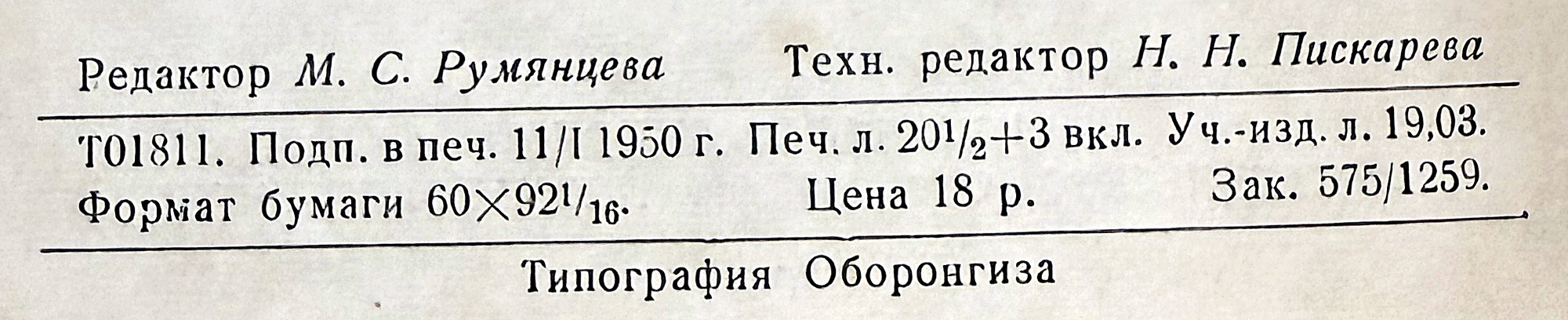
Collation of this copy: signed to press 11 January 1950; 20½ printed sheets plus 3 inserts; 19.03 author-sheets; format 60×92/16; price 18 rubles; order 575/1259; printed at the Oborongiz typography; editor M.S. Rumyantseva, technical editor N.N. Piskareva. Text runs to roughly 324 pages against the 1946 edition’s 472 — consistent with dropping five chapters.
How the Illustrations Travel
The 1946 edition gathers eleven fold-outs at the rear: eight large technical plates and three folded maps. Rear placement of oversized plates is a bindery convenience — separate stock is cheaper to insert as one gathered group than to tip in throughout the text — and says nothing about authorial intent; the figure numbering runs continuously through text and plates alike.
The Soviet edition handles the two kinds of fold-out differently, and the split is instructive. It retained all three geographic maps as fold-out inserts (the colophon’s “3 inserts”: The Hague at 1:40,000, Holland at 1:2,000,000, and the Hellendoorn district at 1:20,000 with V-1/V-2 sites marked). But it reformatted the eight large technical plates into ordinary in-text figures, printed sideways where the page could not otherwise hold them.
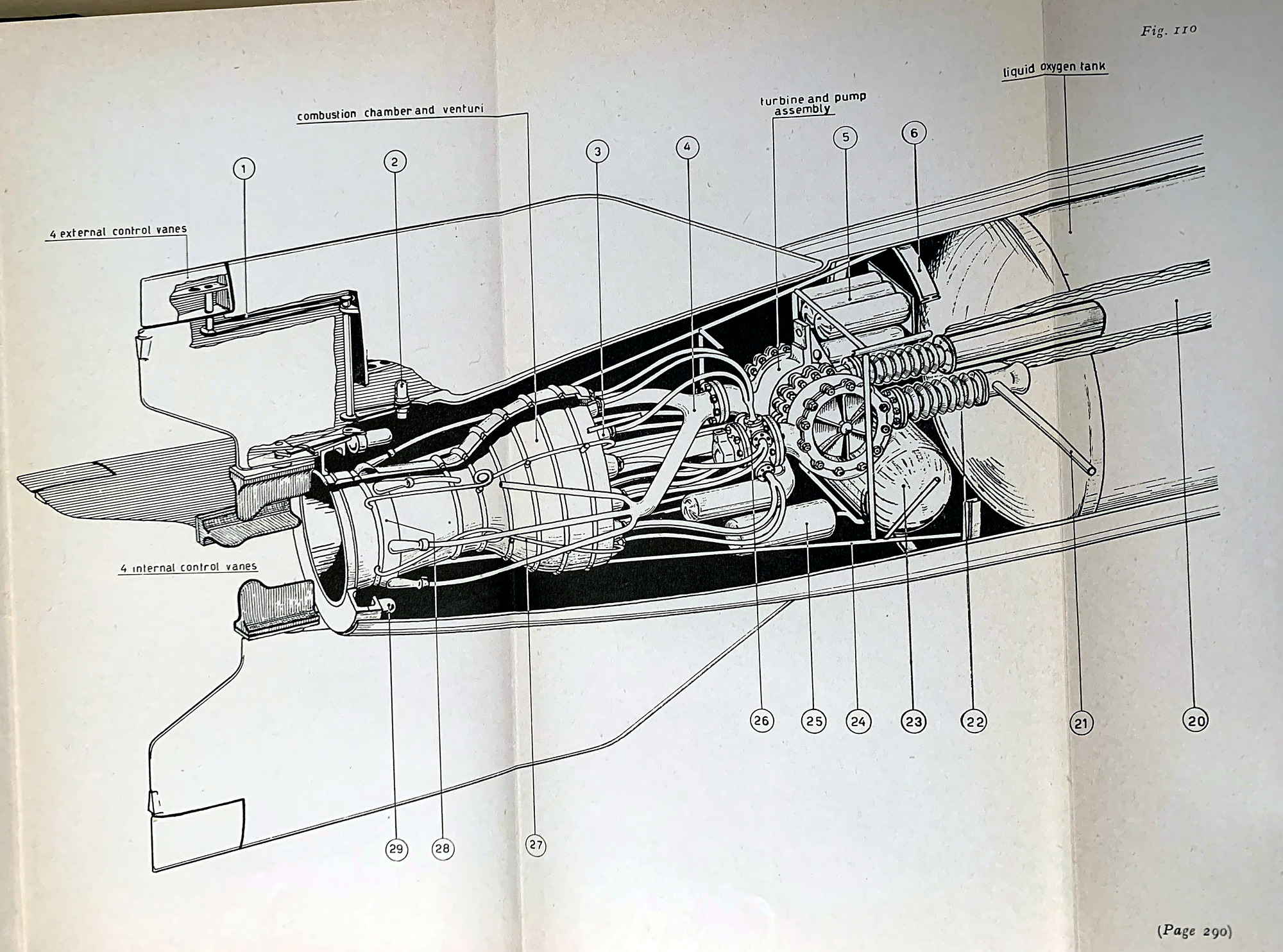
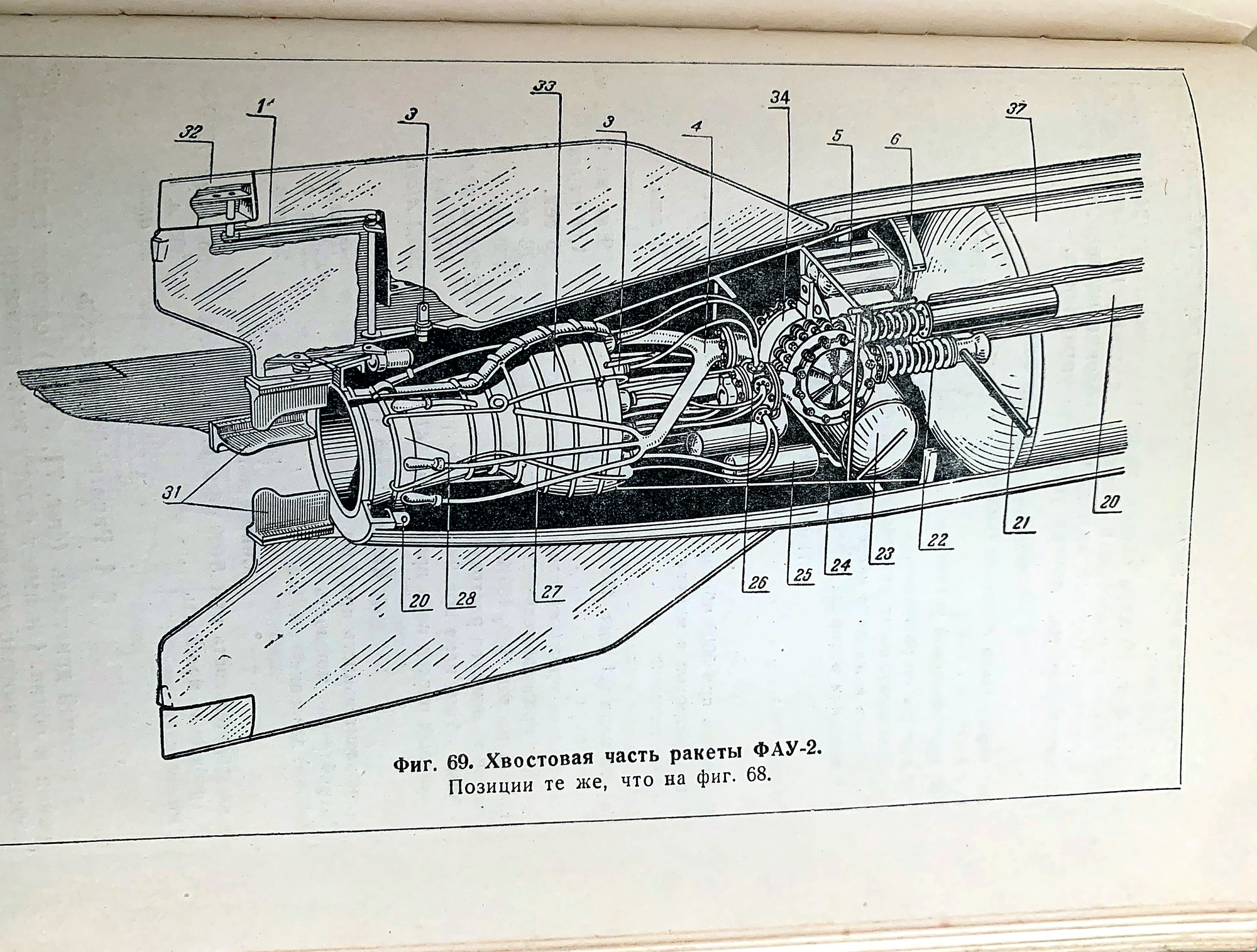
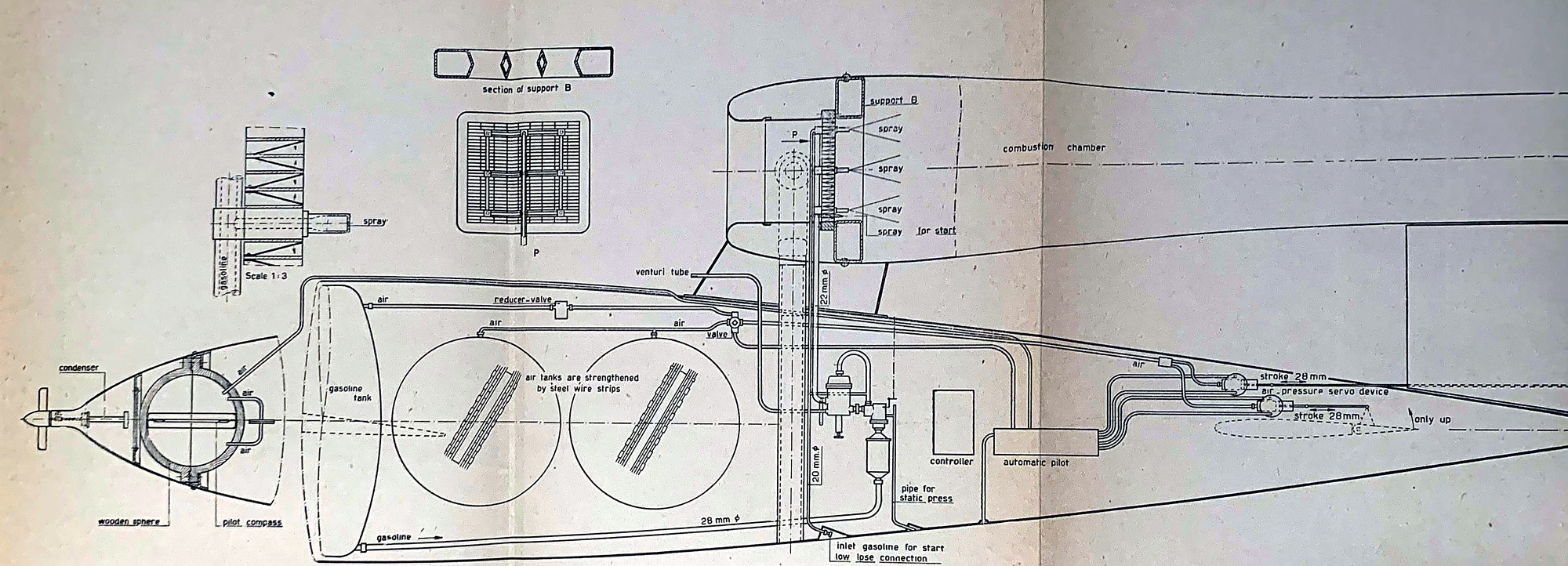
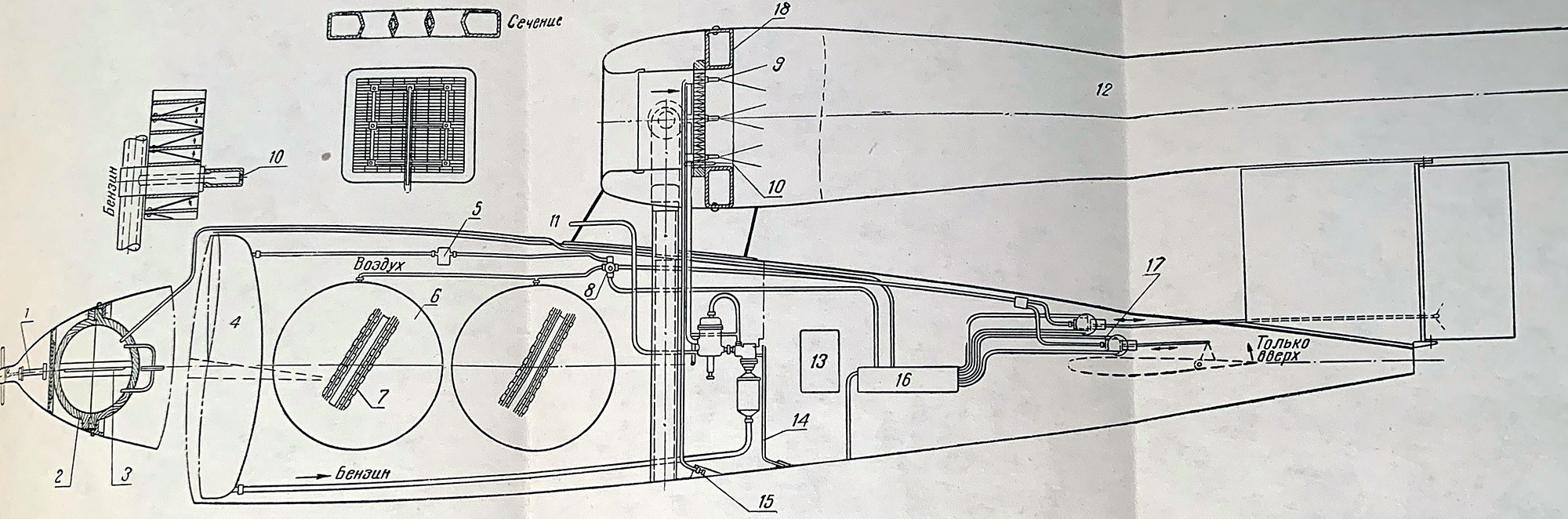
The two editions also place their fold-outs differently, and this is the sharper distinction. The 1946 editions gather every fold-out at the rear of the volume. The Soviet edition instead tips its inserts in at their points of reference: each of the three maps sits near the passage it illustrates, and the one large technical fold-out it retained (the V-1 schematic) is bound in exactly where the text calls for it. Throughout, the original figure numbers are retained. The photographic figures show a coarser halftone screen than the surrounding line work — consistent with re-screening printed plates from a copy of the original rather than working from photographic sources.
What the Soviet Edition Leaves Out
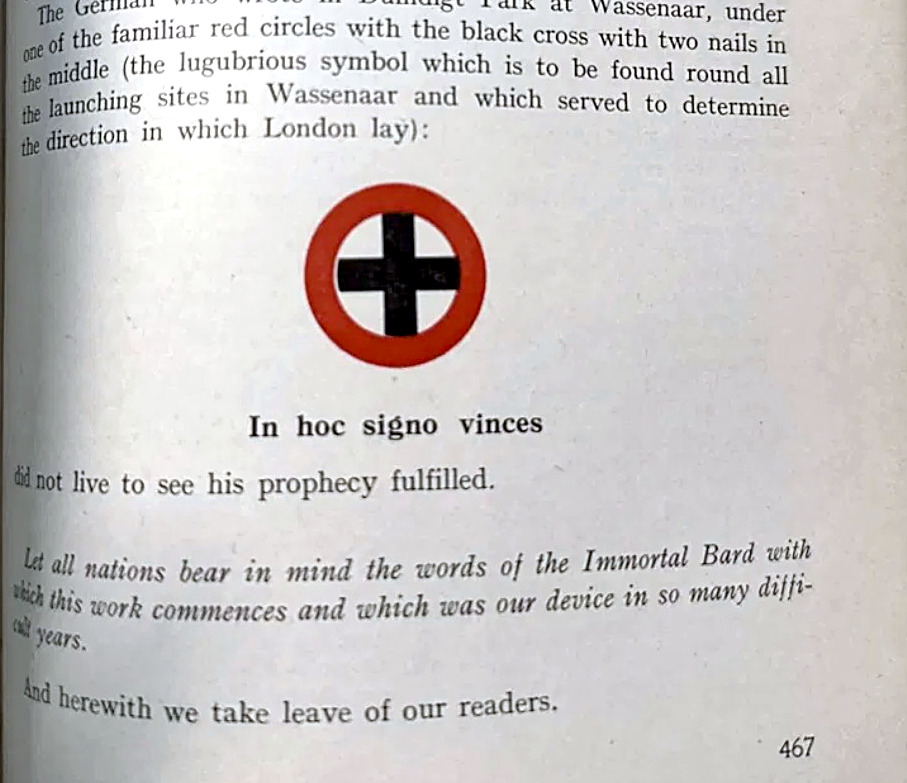
Both English copies open with a pictorial frontispiece and both close, at p. 467, with the authors’ Conclusion and a small two-color device, a red circle enclosing a black cross, printed on the text page depicting the marker painted around the Wassenaar launch sites and the motto beneath it, In hoc signo vinces.
The Soviet edition drops both. The frontispiece is gone and the Conclusion sat among the material trimmed in translation, taking the colored device with it. The literary frame that bracketed the 1946 book is absent from the 1950 edition, which begins instead with Kosmodemyansky’s priority polemic.
Marks of Use: Three Annotators
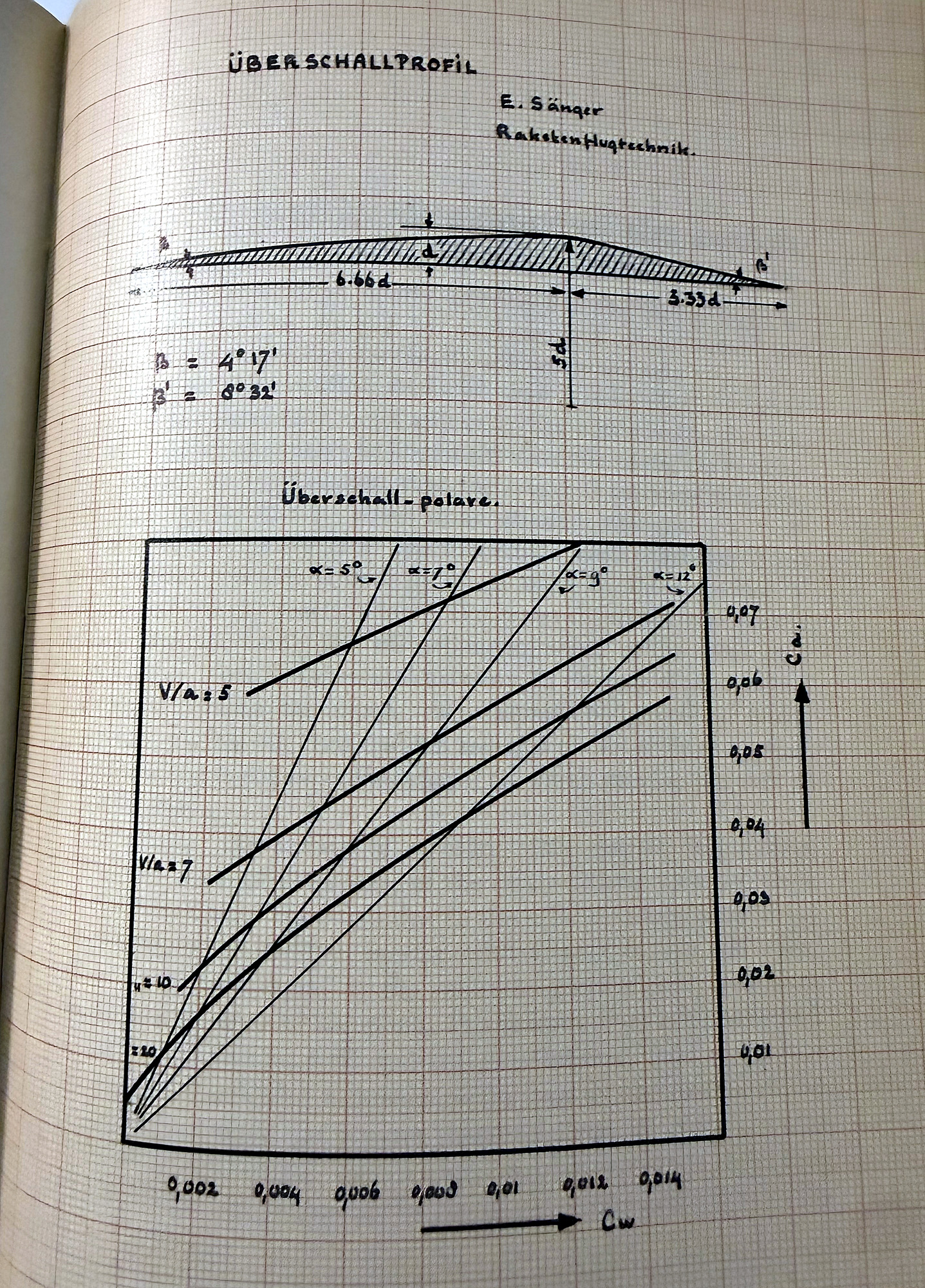
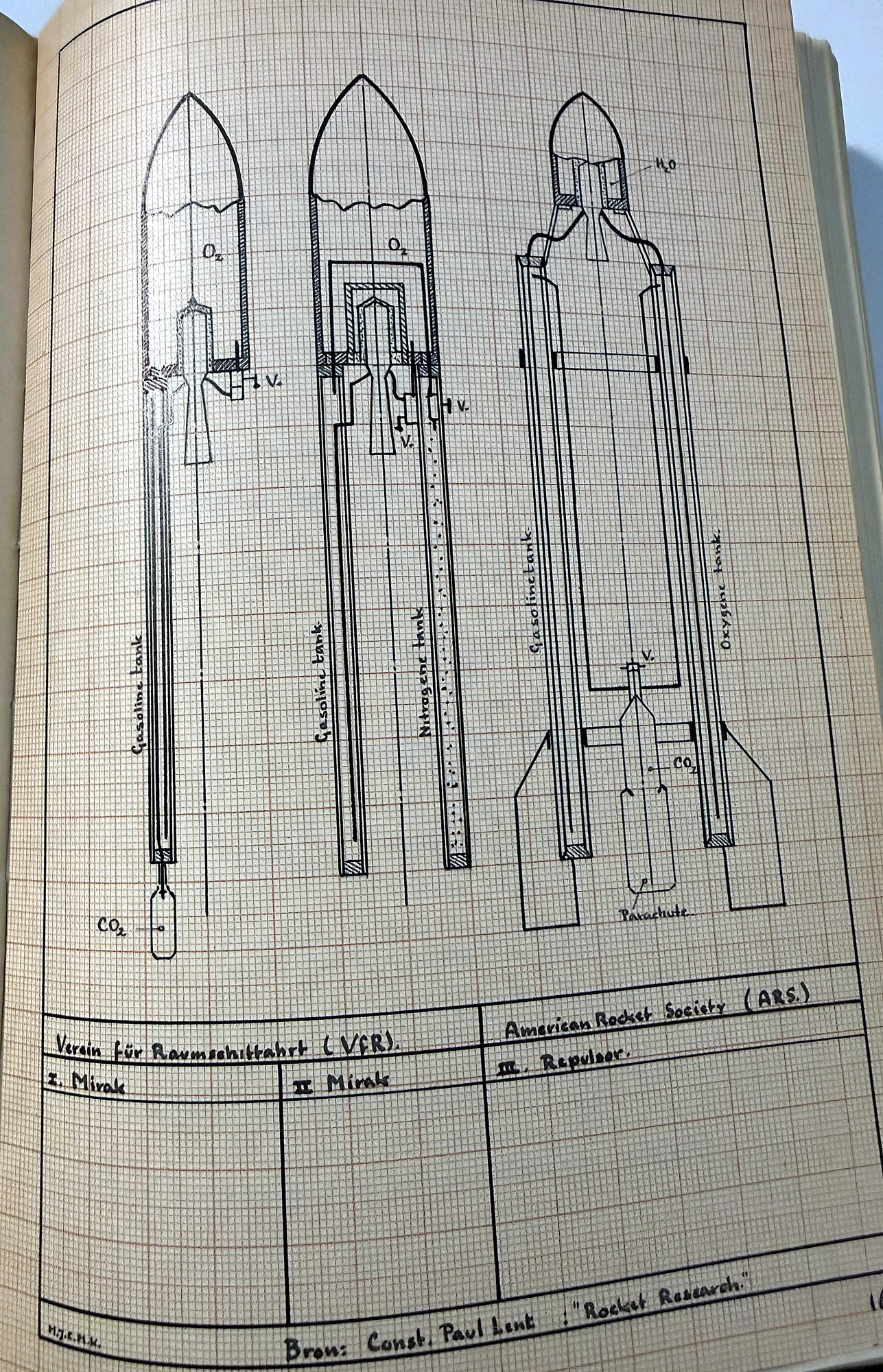
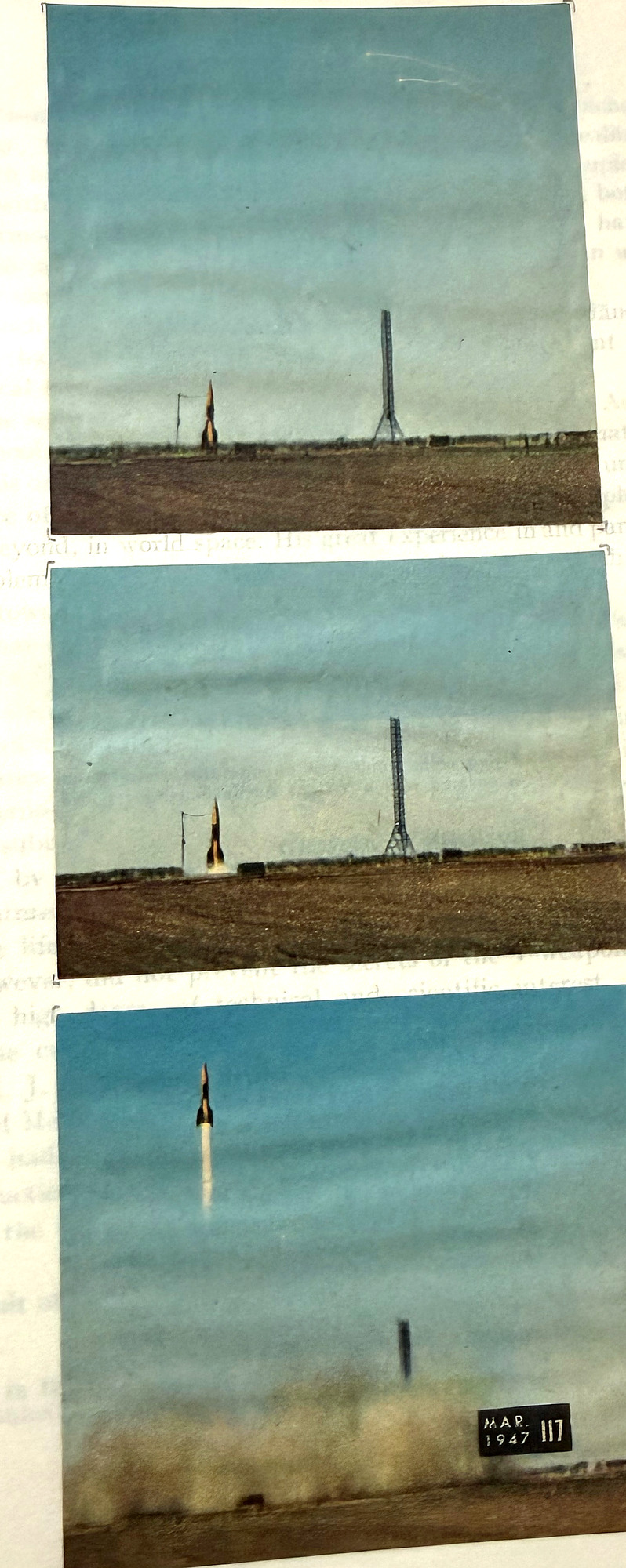
Each copy was worked by a different hand. The Stam copy carries a tipped-in dossier assembled by its owner: hand-drawn sheets on Sänger’s supersonic-profile aerodynamics, comparative propellant-tank schematics of the VfR Mirak and ARS Repulsor, a drag table, a propellant chart, and a V-1/V-2 production-and-expenditure tally—plus three color launch photographs, dated March 1947, laid into the preface. The McGraw-Hill copy has a separate printed errata page annotated by the previous owner. The Soviet copy shows blue and red underlining; its purple library stamp records a private Soviet collection naming three owners, recorded here as provenance.