Catalog A · Early Pioneers · Special Feature
Nikolai Kibalchich
The first rocket designer
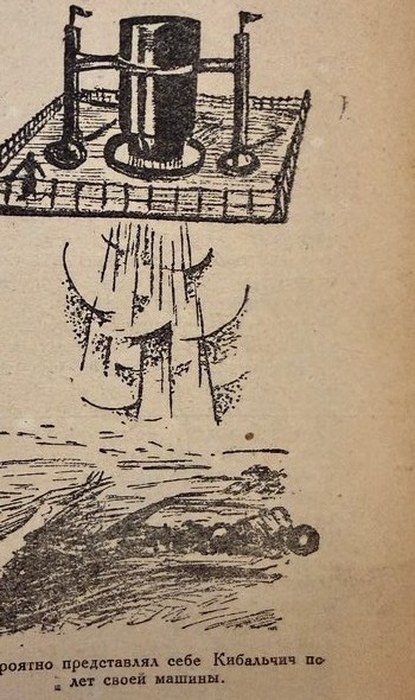
Nikolai Ivanovich Kibalchich was a Russian revolutionary who created the world's first design for a manned rocket-propelled craft. Born in Ukraine to an Orthodox priest, he studied engineering and medicine before being arrested for revolutionary activities. While awaiting execution in 1881 for his role in the assassination of Tsar Alexander II, Kibalchich designed a revolutionary rocket-powered flying platform.
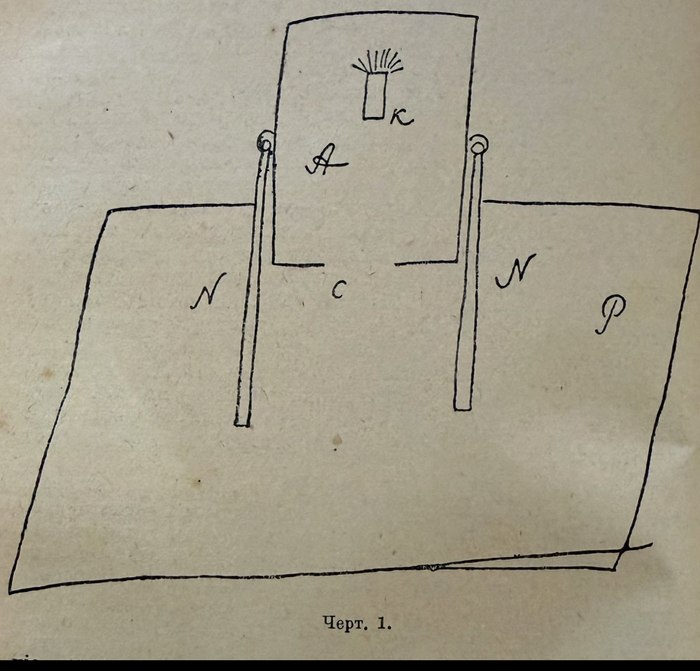
He wrote the project on 23 March 1881 and described a continuously burning rocket engine fed by pressed-powder “candles” pushed automatically into a cylinder, with thrust regulated by the thickness of the candle and steering by tilting the cylinder or adding a second, horizontal one. In a petition of 31 March he asked to meet the technical committee and hear its written verdict, and to see his comrades once more. The requests went unanswered, and Kibalchich was hanged on 3 April 1881.
The gendarmerie sealed the manuscript in an envelope sewn into his case file, where it lay for 36 years until the police archive was opened in August 1917. It was first published in the “1 March 1881” special number of Byloye (Nos. 10–11, April–May 1918), in this collection. The editor’s introduction begins on page 113, Kibalchich’s design on page 115, its diagram (Chart 1) on page 118, and a critique by the engineer Nikolai Rynin on page 122. Rynin credits Kibalchich with priority in applying the rocket principle to flight, but faults the lack of calculations and drawings and lists unresolved problems: heating of the cylinder walls, regulating the burn, the weight of the propellant and cylinder, and the drag of the platform. The editors also note that a 1916 claim in Aerial Russia that the War Minister had seen the project is mistaken, since it never left the police department.
Although his gunpowder-based propulsion system would have been impractical, Kibalchich is recognized as an important pioneer in rocket science, with a lunar crater bearing his name.