Catalog B · WWII · Special Feature · Book of Note
A Neutral Engineer’s War
Josef Stemmer’s Die Entwicklung des Raketenantriebes, Zurich, 1944–45
Josef Stemmer wrote as a private engineer in neutral Switzerland, updating his manuscript in real time as the most destructive rocket campaign in history unfolded around his country’s borders. All three volumes are signed off from Solothurn, where his employer, Scintilla AG (the precision-tool manufacturer in nearby Zuchwil), had reportedly built him a rocket test stand in the 1930s. The result, three slim volumes issued between October 1944 and February 1945, is a technically literate, evenhanded survey of rocket propulsion written while it was still happening, by someone with genuine hands-on experience and no obligation to flatter anyone.
A Dated Conversation with the Reader
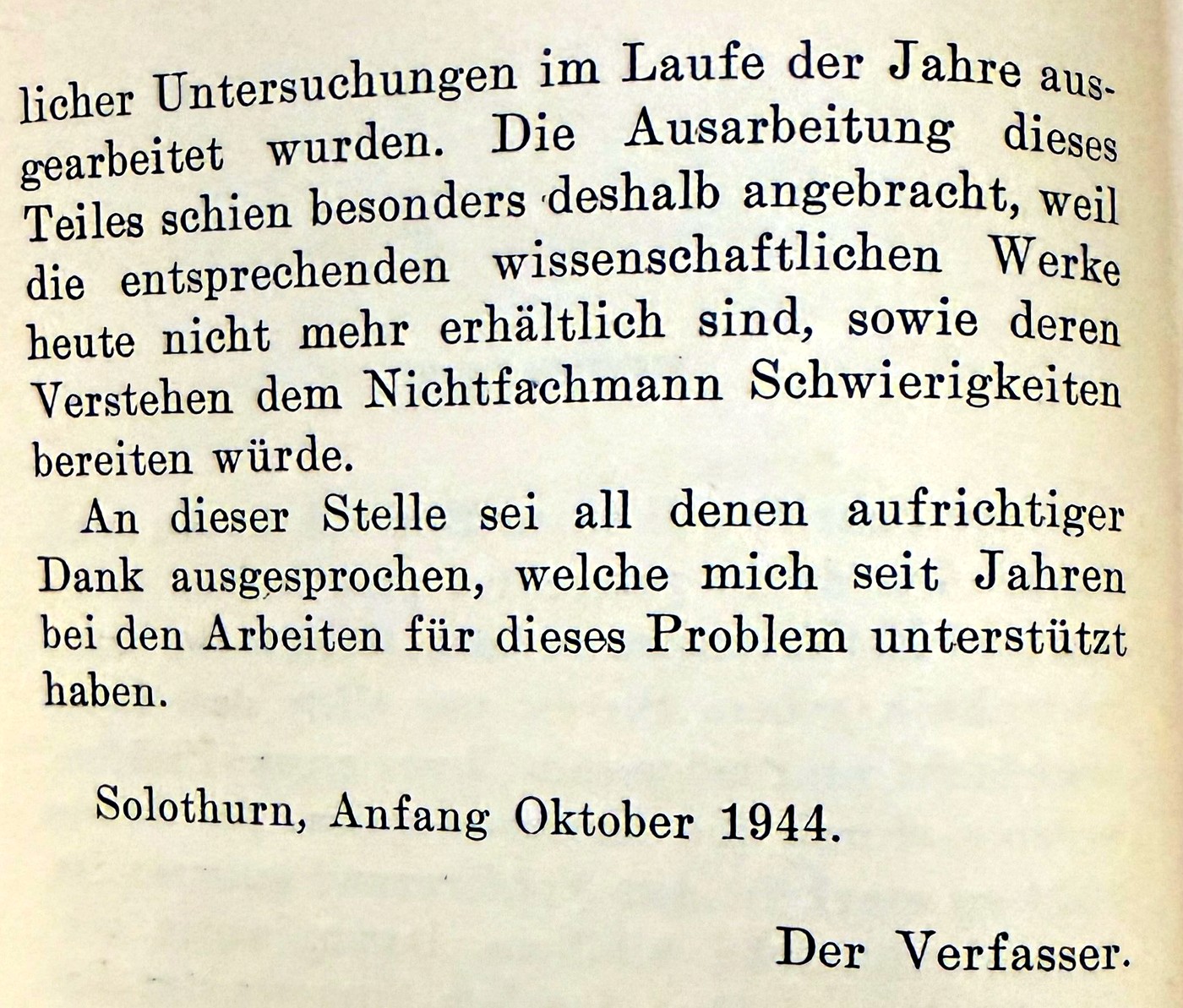
Each volume opens with its own preface (Vorwort), and read together they form something close to a diary. Band I is signed “Solothurn, early October 1944” (Anfang Oktober 1944); Band II, “early December 1944” (Anfang Dezember 1944); Band III, “in February 1945” (im Februar 1945), roughly three months later. The prefaces even share a stock sentence about the war having pushed rocketry to the fore (in den Vordergrund), and the wording of that sentence changes between volumes: Bands I and II both cite “the war events of the year 1944” (die Kriegsereignisse des Jahres 1944), but by February, Band III has quietly updated it to “the war events of the years 1944 and 1945” (die Kriegsereignisse der Jahre 1944 und 1945). Stemmer was still revising his own framing as the calendar turned, a small detail, but a rare case of a wartime author’s text visibly catching up to the war in progress.
Watching Both Sides at Once
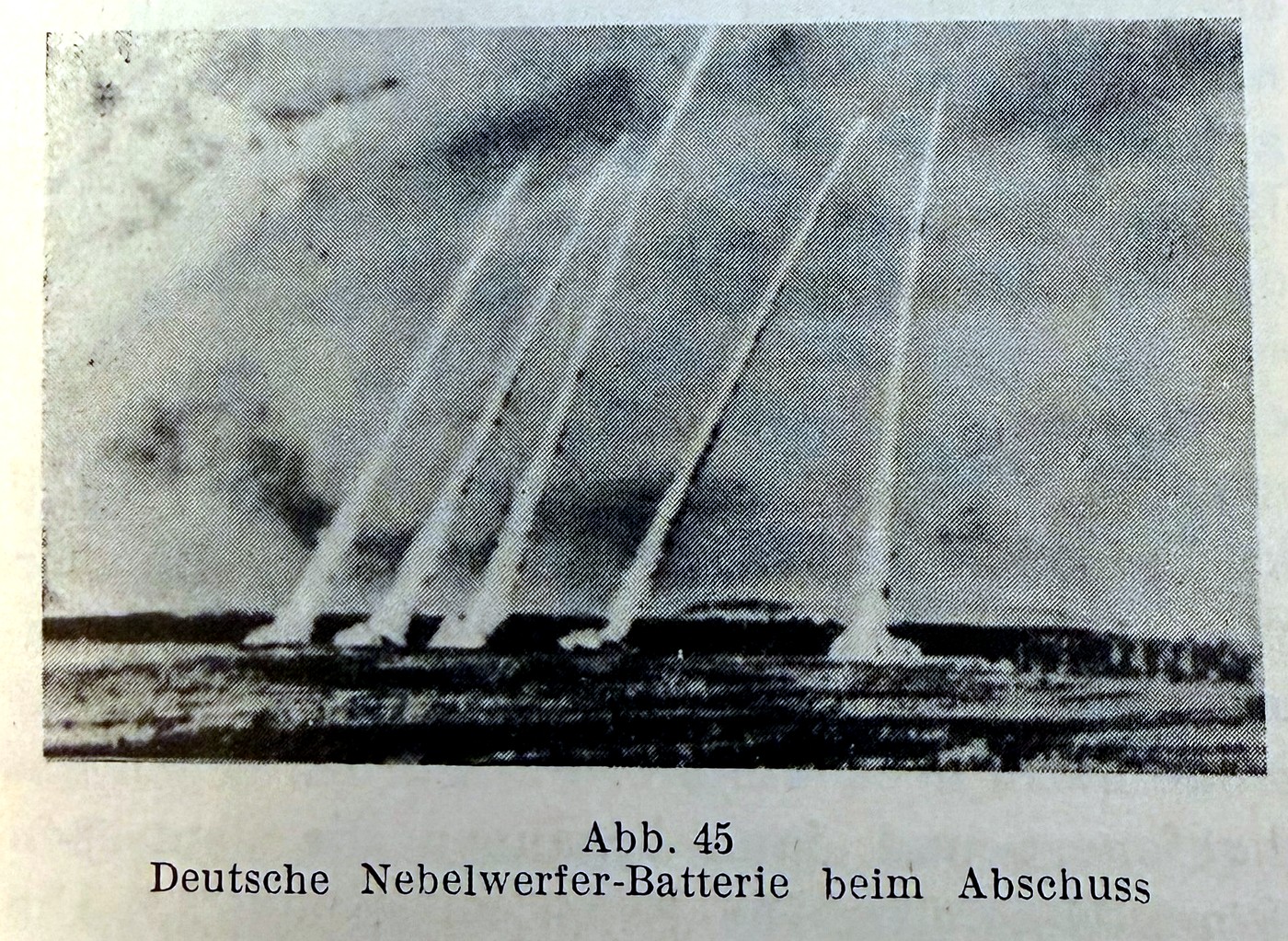
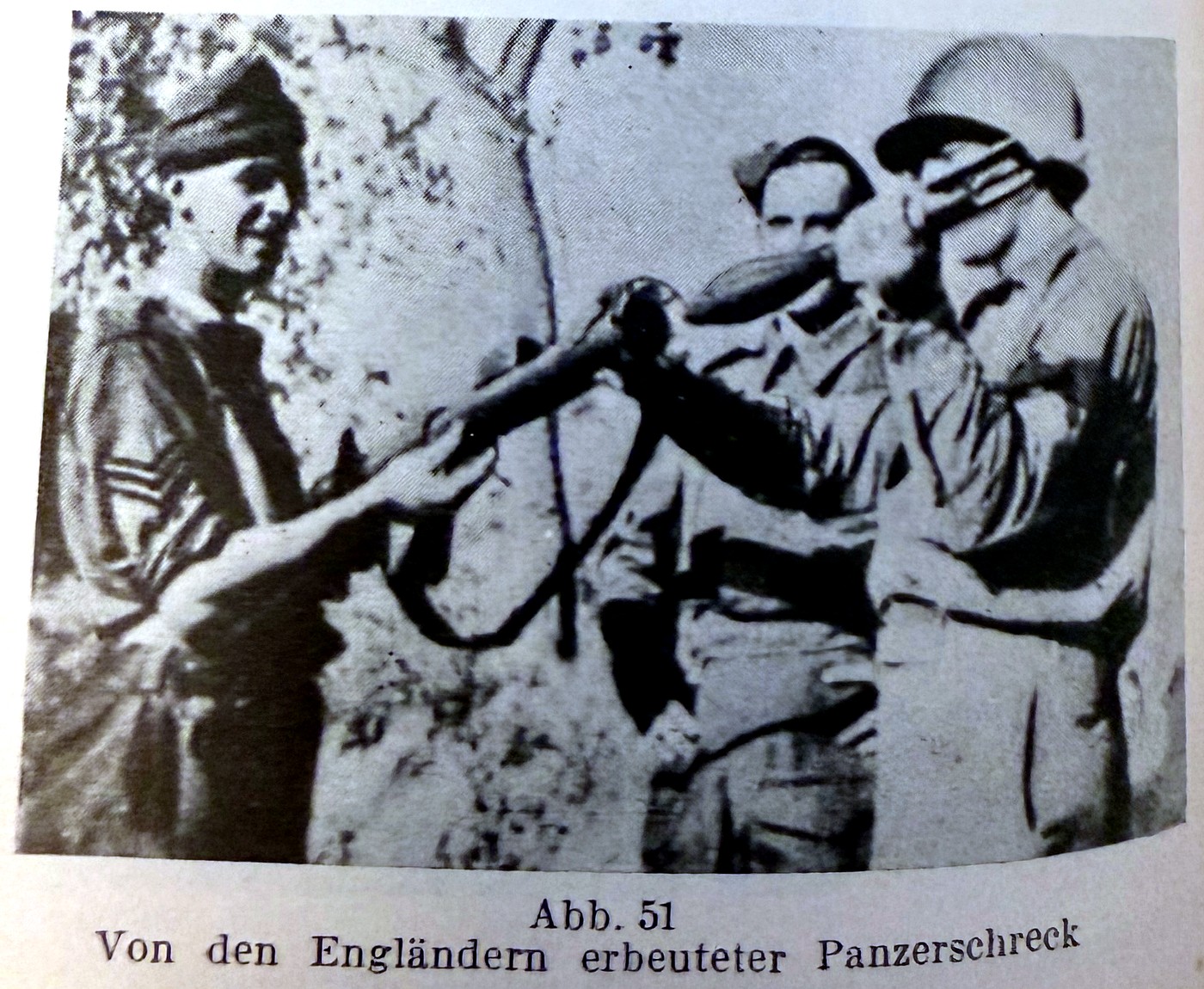
What sets Stemmer apart from his belligerent contemporaries is that he had no reason to pick a side, and it shows. Band II, The Rocket Weapons of the Second World War (Die Raketenwaffen des zweiten Weltkrieges), reads like a comparative intelligence briefing rather than propaganda from either camp. German Nebelwerfer batteries are set against the Soviet “Katiuschka,” which he can only describe by reputation, admitting outright that no technical details had reached him. British rocket-firing Typhoons are illustrated a few pages after the Luftwaffe rocket attacks on Allied bombers that provoked their development. A captured Panzerschreck, photographed in the hands of British soldiers, sits across the page from a captured German rocket-artillery trailer seized during the invasion of France. Even the jet engine survey in Band I ranges freely across Italian (Campini), British (Whittle, reproduced from his own 1935–36 patents), and German material without favoring any of them.
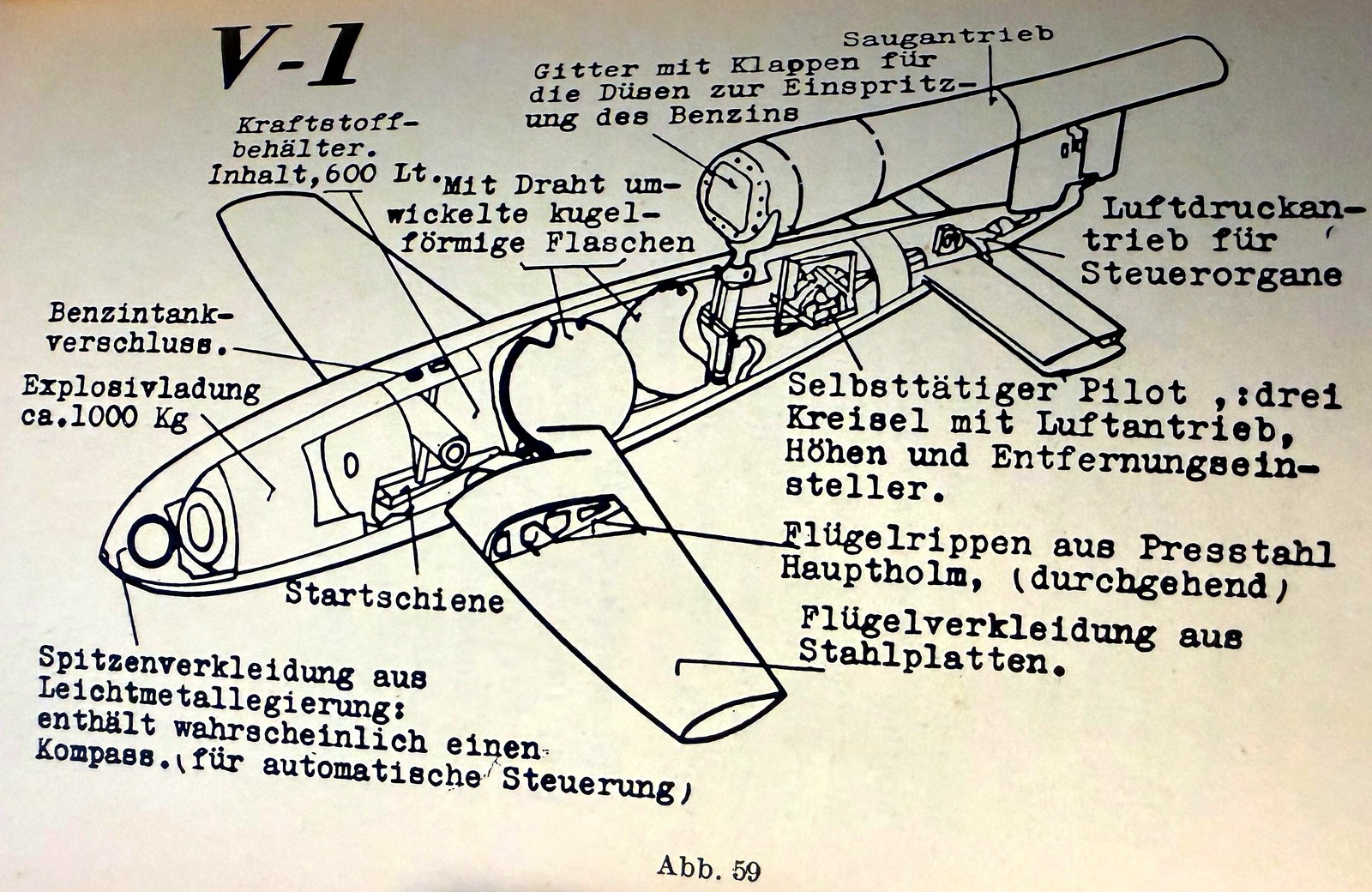
The V-1 section is the standout. Stemmer’s source for the definitive cutaway diagram of the weapon was an actual Allied intelligence leaflet, dropped, he notes, over Romanshorn in August 1944, presumably having drifted off course from a drop meant for German territory and landed on neutral Swiss soil instead. He reproduces it, then goes further, reverse-engineering the pulsejet’s internal valve mechanism himself and flagging where he suspects the popular press has it wrong. He quotes Churchill’s own casualty reports to Parliament nearly verbatim: 2,750 V-1s fired and 2,752 dead as of 6 July 1944, rising to 5,040 fired and 4,735 dead by 3 August, transcribing a live wartime news cycle into a technical manual as it happened.
An Engineer, Not a Journalist
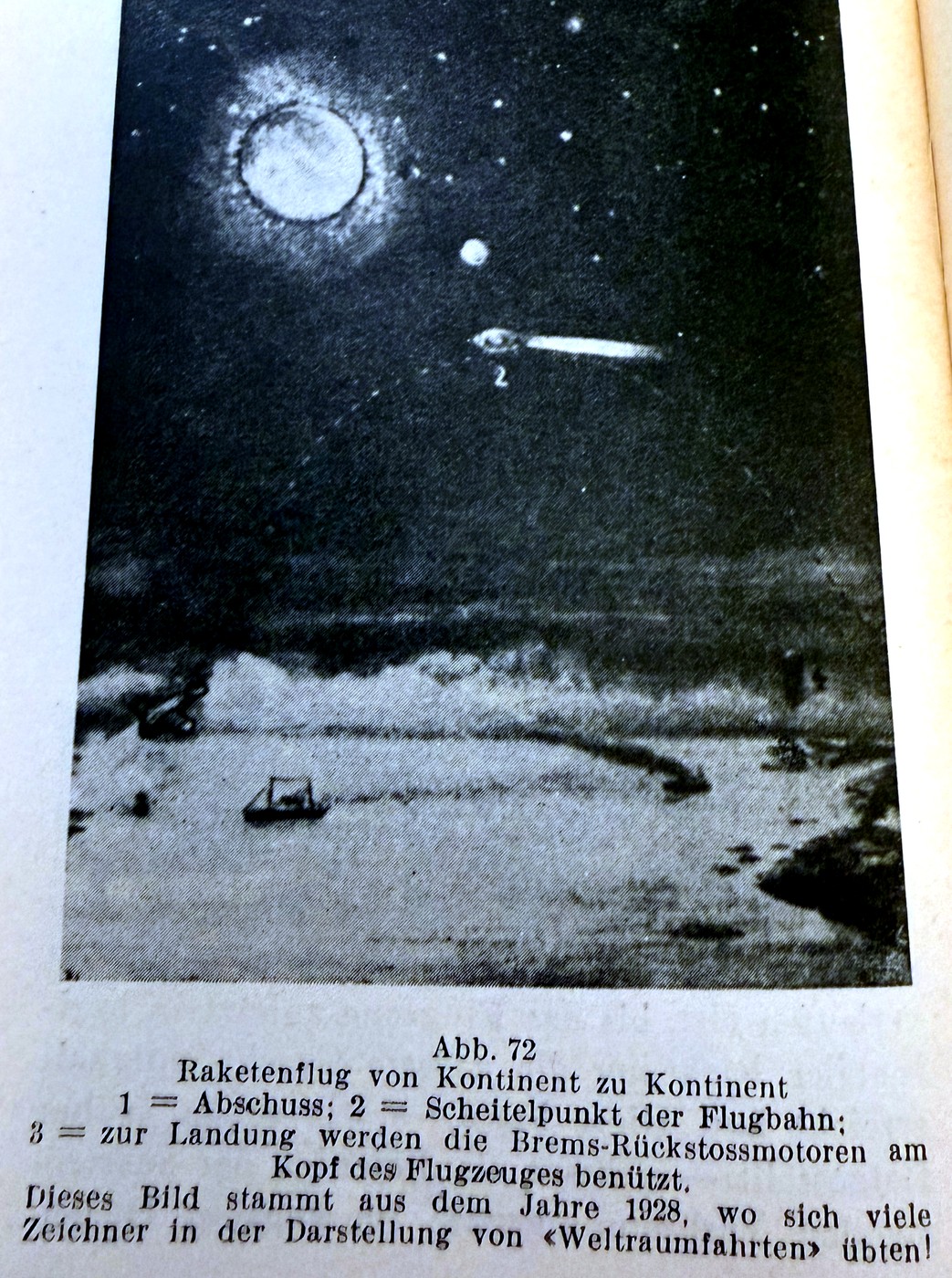
Stemmer wasn’t simply compiling clippings. He built and flew wireless remote-control experiments of his own in Switzerland and writes candidly about where they failed. He calculates, from first principles, that a V-1-sized airframe with a genuine liquid-oxygen rocket motor could hit 4,300 km/h. He works through the physiology of high-g flight: pulse rates, blackout thresholds, a documented 17.3g briefly tolerated in a reclining test subject, material closer to aerospace medicine than wartime pamphleteering. And in Band II’s closing pages, having spent the volume almost entirely on weapons, he pivots to something almost wistful: a considered case, backed by exhaust-velocity math and a nod to Max Valier’s 1928 transatlantic rocket-plane project, that a Zurich to New York flight of thirty minutes to three hours lay within technical reach. “In times like these,” he writes, closing the volume, “the word ‘impossible’ must be used with great caution.”
The Set
This is a complete, matched first-edition run: Band I (Nr. 106, Rocket Travel, Rocket Flight / Raketenfahrt-Raketenflug, 1944), Band II (Nr. 107, The Rocket Weapons of the Second World War / Die Raketenwaffen des zweiten Weltkrieges, 1945), and Band III (Nr. 108, Rocket Flight Projects / Raketenflugprojekte, 1945), issued as part of the general-interest Hofmann-Bibliothek series out of Zurich.
Band I lays the groundwork across seven chapters: why aircraft needed a new kind of engine, the transition from powder rockets to recoil motors, the mathematics of rocket propulsion, rocket-powered ground vehicles, early powder-rocket flight tests, and finally the liquid-fuel rocket motor, the technology he clearly regarded as the field’s real future.
Band III turns outward. It surveys wartime rocket and space-flight projects nation by nation, French, Russian, American, German, Italian, English, Hungarian and Swedish work, a section candidly headed “individual, unverifiable works” (Einzelne, nicht kontrollierbare Arbeiten), Swiss work of its own, and a closing bibliography, compiled from open literature before the war had even ended.
Stemmer went on to found the Schweizerische Astronautische Arbeitsgemeinschaft (Swiss Astronautical Study Group) around 1950–51 and served as the International Astronautical Federation’s first Honorary Secretary from its founding in 1951, later helping organize its 4th congress in Zürich in 1953. The rocket engineer taking careful notes on a war he could observe but not join went on, within a few years, to help build the international body still governing astronautics today.