Catalog D · Prelude to Sputnik · Special Feature
Visions of the Space Station and the Rocket Bomber
Two engineering dreams reach a wide readership, 1952
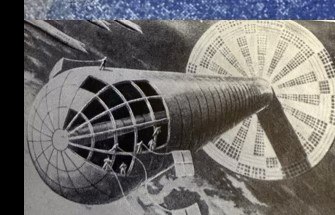
1952 brought two very different engineering visions to a mainstream audience. In March, Collier’s magazine ran “Man Will Conquer Space Soon,” built around Wernher von Braun’s detailed proposal for a wheel-shaped, rotating space station in Earth orbit — a design intended to provide artificial gravity and serve as a staging point for lunar and Mars expeditions. The article was popular enough to be expanded into Across the Space Frontier, edited by Cornelius Ryan and cataloged in this collection, cementing the station’s wheel silhouette as the public’s default image of a space station for a generation.
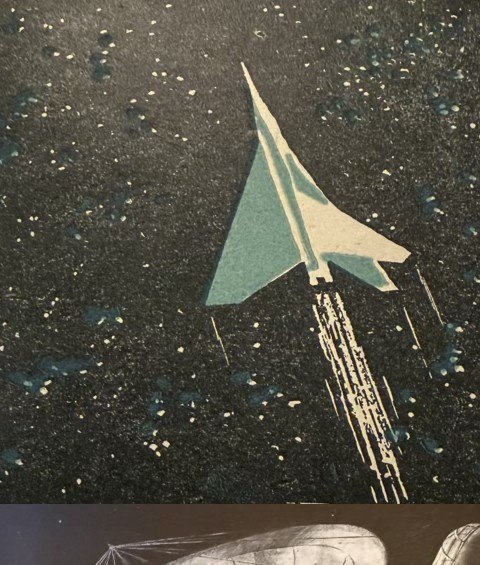
That same year saw the first commercially available English translation of Eugen Sänger and Irene Bredt’s wartime study Über Einen Raketenantrieb Für Fernbomber (1944), published as A Rocket Drive for Long Range Bombers and also in this collection. Sänger and Bredt’s “antipodal bomber” would skip across the upper atmosphere on its own shockwave after a rocket-powered launch, a concept far beyond what wartime Germany could build but one that would influence spaceplane and boost-glide vehicle studies for decades afterward.